Key takeaways |
|---|
|
Brain-computer interface (BCI) technology creates a direct communication pathway between the brain and an external device.
By translating neural activity into digital commands, brain-computer interfaces allow people to communicate with or control computers using brain signals instead of keyboards, touchscreens, or voice commands.
Humans controlling machines with their thoughts is often associated with science fiction, but brain-computer interface technology is already being used in the real world, particularly in the medical field for people with paralysis. And the applications for BCIs are expanding rapidly as the technology improves.
What Is a Brain-Computer Interface?
A brain-computer interface is a system that records brain activity, interprets those neural signals, and then converts them into commands that control software or hardware.
BCI technology doesn’t “read thoughts,” but rather detects electrical patterns generated by neurons and uses machine learning to recognize the person’s intent.
How Brain Signals Become Digital Commands
Every movement, decision, and intention produces electrical activity in the brain. Depending on the system, this activity can be captured through electrodes placed on the scalp or through implants positioned closer to the brain's surface.
The raw signals are noisy and difficult to interpret, so this is where AI plays a crucial role. Machine learning models identify neural patterns associated with certain actions—such as moving a cursor, selecting letters on a screen, or controlling a robotic arm—and continuously improve as they learn from the user. Over time, the interface becomes more accurate and responsive.
Invasive vs. Non-Invasive Systems
Not all brain-computer interfaces work the same way.
Invasive BCIs involve surgically implanted electrodes that record signals directly from the brain. Because they capture high-quality neural data, invasive BCIs are currently the most precise systems and are primarily developed for medical applications such as restoring communication or movement to people who are paralyzed.
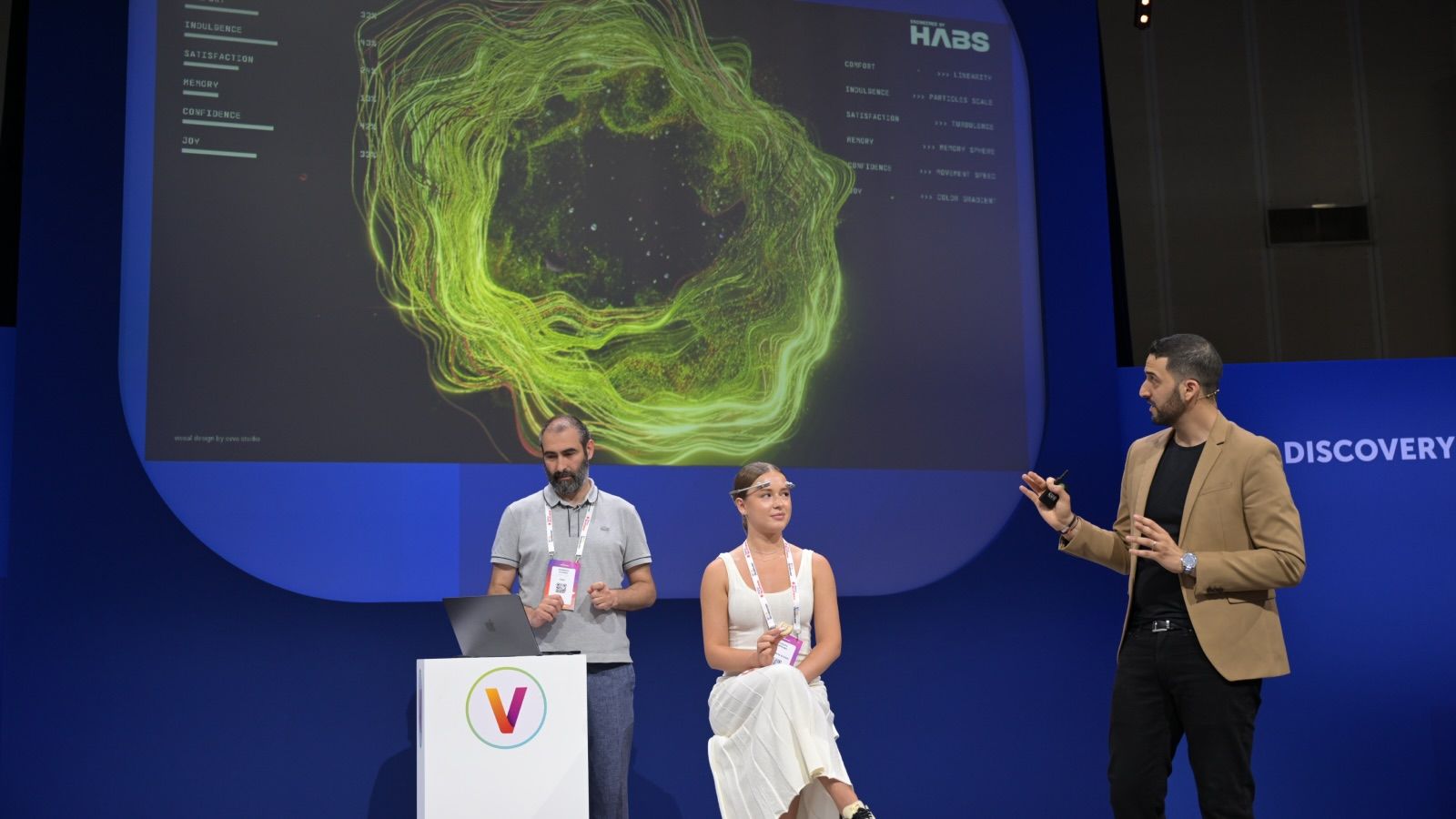
Non-invasive BCIs use external sensors, typically electroencephalography (EEG), to detect electrical activity through the scalp. These systems produce lower-resolution signals, but are significantly easier to use, making them more relevant for future workplace and consumer applications.
Enterprise adoption of brain-computer interfaces will almost certainly start with wearable, non-invasive technologies.
Why Brain-Computer Interfaces Are Gaining Ground Now
Brain-computer interfaces have been used in research laboratories for decades. Now, several tech advancements have made them more practical for outside the lab.
Faster Regulatory Pathways and New Approvals
Medical innovation continues to drive the brain-computer interface field forward. Regulators in the U.S., China, Australia, Canada and a handful of other nations have approved clinical trials for implanted BCIs designed as a tool for people with paralysis.
Improvements in wireless electronics, battery efficiency, and miniaturized sensors have made both implanted and wearable systems easier to use in non-medical settings.
As clinical evidence grows, investment and commercial interest in BCIs has also accelerated.
From Neuralink to Synchron: A Growing Field of Players
Neuralink is widely considered the best known brain-computer interface company. Founded by Elon Musk, it develops implantable neurotechnologies with the primary goal of helping people with severe paralysis. But Neuralink is also exploring longer-term applications that could expand how humans interact with computers and AI.
Another prominent company in the clinical BCI field is Synchron, which is developing less invasive systems. Its flagship product Stentrode accesses the brain through blood vessels instead of an implant in a person’s skull. Synchron began an early feasibility study in 2026 and is advancing toward large-scale regulatory trials and commercialization.
Other leaders in the BCI space include Precision Neuroscience, which developed a minimally invasive electrode array that sits on the brain's surface instead of penetrating it, and Blackrock Neurotech, a pioneer in the field with over 200 human implants to its name.
Where Brain-Computer Interfaces Are Already Changing Work
The technology is still in its early stages, but several practical applications for enterprise adoption are emerging.
Monitoring Focus and Fatigue in High-Stakes Roles
Some industries are experimenting with wearable neural sensors that can monitor cognitive workload, fatigue, or attention.
Air traffic controllers, long-haul drivers, pilots, and industrial operators work in environments where lapses in concentration can have significant consequences. EEG-based systems could eventually provide real-time indicators of fatigue, allowing for intervention before safety risks escalate.
These tools would not judge employee performance. Instead, they could function like advanced health and safety systems, helping identify when workloads become unsustainable or when additional support is needed.
Hands-Free Control for Industrial and Field Work
Brain-computer interfaces could also allow workers to interact with digital systems in situations where traditional controls are impractical.
Imagine technicians working at extreme heights, surgeons performing complex procedures, or engineers operating machinery with both hands. Neural interfaces could eventually be used along with voice commands, gesture recognition, and augmented reality to control software.
What Brain-Computer Interfaces Could Mean for the Enterprise
BCIs are unlikely to become replacements for keyboards and touchpads, but could expand how people collaborate with intelligent systems.
New Tools for Productivity and Accessibility
Accessibility is currently the most compelling reason for enterprises to adopt BCI.
For employees living with paralysis or other physical disabilities, brain-computer interfaces could provide entirely new ways to interact with workplace software, participate in meetings, or communicate with colleagues. As the technology improves, BCIs could become another accessibility tool like speech recognition, eye tracking, and adaptive interfaces.
But beyond accessibility, neural interfaces could eventually streamline repetitive digital interactions and allow employees to navigate applications or manipulate information more easily.
Rethinking How Teams Interact with Technology
Brain-computer interfaces are unlikely to replace existing business technology, but instead become part of their computing toolbox.
Future workplaces could combine voice assistants, generative AI, augmented reality, computer vision, and neural interfaces into seamless workflows. Employees could easily move between speaking, typing, gesturing, and using neural commands depending on the task.
In this use case, BCIs reduce the barriers between human intent and digital action.
What Businesses Should Weigh Before Adopting Brain-Computer Interfaces
Like every transformative technology, BCIs introduce new responsibilities alongside new opportunities.
Privacy, Consent, and Data Ownership
Neural data is unlike any other form of information. While BCIs don’t read thoughts, they do collect highly personal biological signals. Before adopting these systems, organizations would need clear policies governing what data is collected, how it is stored, who can access it, and how employees provide meaningful consent.
The workplace setting itself raises additional questions. Could employees feel pressured to use cognitive monitoring tools? How should organizations separate health data from performance evaluation? These dilemmas extend into ethics, employment law, and corporate governance.
Building Trust Through Standards and Transparency
Trust will play a huge role in determining whether brain-computer interfaces are widely adopted.
Businesses would need to prioritize transparency around how systems work, what information they collect, and the specific outcomes they are designed to improve. Independent validation, cybersecurity protections, and clear regulatory standards will all play critical roles in building confidence among employees and customers.
Successful adoption will require integrating BCIs into digital transformation strategies that emphasize user choice, accessibility, and measurable business outcomes.
So, What Do Brain-Computer Interfaces Mean for the Future of Work?
Brain-computer interfaces are still an emerging technology, but their future is becoming clearer. As machine learning makes neural signals easier to interpret, the technology will gradually move beyond specialized medical settings into more commercial applications.
In the near term, the biggest impact will continue to be in healthcare. The enterprise timeline is longer, but there is significant potential. Wearable neural interfaces could improve workplace safety, expand accessibility, enable hands-free computing, and create more natural ways to interact with AI-powered systems.
The future of work is unlikely to be employees controlling every application with their minds. Brain-computer interfaces will probably become one component of a digital workplace, in the same bucket as AI, voice interfaces, augmented reality, and wearable technologies.
Business leaders don’t need to prepare for mass deployment of BCIs tomorrow. But it’s important to understand where the technology is heading, and be able to separate realistic opportunities from science fiction.
For more on how biological signals are being transformed into meaningful data, check out this article: Wearable Technology in Healthcare: Are Smart Devices the Next Stethoscopes?
FAQs |
|---|
What is a brain-computer interface?A brain-computer interface is a system that records brain activity, interprets those neural signals, and then converts them into commands that control software or hardware. |
How do brain-computer interfaces work?Every movement, decision, and intention produces electrical activity in the brain. Depending on the system, this activity can be captured through electrodes placed on the scalp or through implants positioned closer to the brain's surface. By translating neural activity into digital commands, brain-computer interfaces allow people to communicate with or control computers using brain signals instead of keyboards, touchscreens, or voice commandsBCI technology doesn’t “read thoughts,” but rather detects electrical patterns generated by neurons and uses machine learning to recognize the person’s intent. |
What are brain-computer interfaces used for in business?Some industries are experimenting with wearable neural sensors that can monitor cognitive workload, fatigue, or attention. Air traffic controllers, long-haul drivers, pilots, and industrial operators work in environments where lapses in concentration can have significant consequences. EEG-based systems could eventually provide real-time indicators of fatigue, allowing for intervention before safety risks escalate. |
Are brain-computer interfaces safe?Medical innovation continues to drive the brain-computer interface field forward. Regulators in the U.S., China, Australia, Canada and a handful of other nations have approved clinical trials for implanted BCIs designed as a tool for people with paralysis. |
What is the future of brain-computer interfaces in the workplace?In the near term, the biggest impact will continue to be in healthcare. The enterprise timeline is longer, but there is significant potential. Wearable neural interfaces could improve workplace safety, expand accessibility, enable hands-free computing, and create more natural ways to interact with AI-powered systems. The future of work is unlikely to be employees controlling every application with their minds. Brain-computer interfaces will probably become one component of a digital workplace, in the same bucket as AI, voice interfaces, augmented reality, and wearable technologies. |