 The holidays can be filled with joy and community, but there can also be that awkward moment when the conversation stalls or takes a turn. Not to worry! A smart, unexpected tech fact can bring things back. Here are five talking points to keep things light and interesting during the holidays.
1. The First Computer Bug Was Literally a Bug
Long before software crashes, the word “bug” already meant a technical flaw. Thomas Edison used that way back in 1878. But the term truly stuck in 1947, when engineers working on Harvard University’s Mark II computer found an actual moth trapped in the machine. The team taped the insect into their logbook and wrote: “First actual case of bug being found.” From then on “debug” and “bug” became part of the tech language...and we’ve been blaming glitches on bugs ever since.
2. Your Phone Is Now the World’s Biggest Shopping Mall
Mobiles officially overtook desktops as the main device for online sales in 2023...and they haven’t looked back since. So far this holiday season, mobile purchases accounted for 52.8% of all online sales valued at 73.7 billion in spending.
In other words, most shopping now happens while waiting in line, commuting, or pretending to listen to someone tell the same story for the third year in a row.
3. A Weaving Machine Helped Lead to Modern Computing
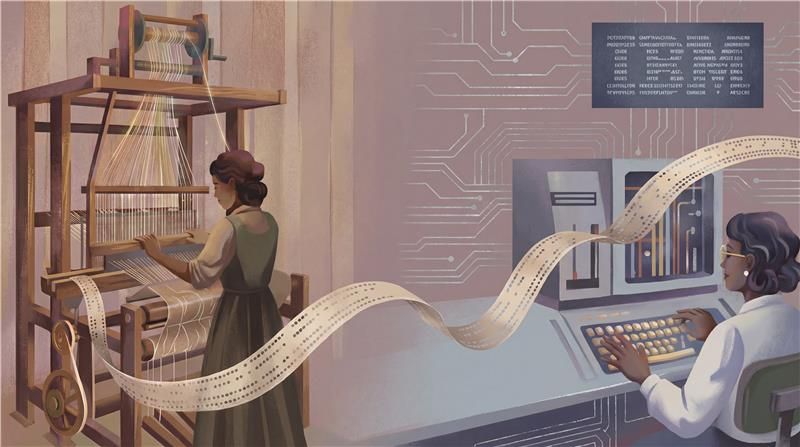
Long before laptops and smartphones, there was the Jacquard loom. Invented in 1804, this weaving machine used a series of punch cards to tell it which patterns to make. If you swap thread for data, it starts to look surprisingly familiar.
The idea of using punch cards to instruct a machine inspired Charles Babbage and Ada Lovelace and their analytical engine, which is often described as the first computer program.
It also inspired Herman Hollerith, who expanded the idea to invent data storage on punch cards that would be read by a machine in the late 1880s. This invention would be the start of his company, which went on to become IBM.
4. The First Digital Photos Were Baby Pics.
The first digital image ever made, and the first photo sent from a mobile phone were both pictures of newborn babies.
In 1957, Russell Kirsch a computer pioneer at the U.S. National Institute of Standards and Technology, created the world’s first digital image using a rotating drum scanner. The subject? Kirsch’s three-month-old son.
Fast forward forty years and fatherly love continued to innovate digital images. In 1997, engineer and entrepreneur Philippe Kahn, brought his phone, laptop, and digital camera to the hospital where his wife was giving birth. After his newborn daughter, Sophia, arrived he used the three to send the first known digital image sent by phone so his friends and family could see the picture of his new pride and joy.
5. The World’s First Web Page is Still Active Today
The world wide web was launched in Switzerland in 1990 by British scientist Tim Berners-Lee while he was working at CERN. The web was originally created for information sharing between scientists and institutions around the world. The first web address was https://info.cern.ch/hypertext/WWW/TheProject.html and hosted information about the newly minted web. The CERN launched a project in 2013 to restore the web page and this bit of internet history.


