Remote work isn’t new; the term “telework” dates back to 1973. But the way we work has evolved rapidly alongside new digital tools.
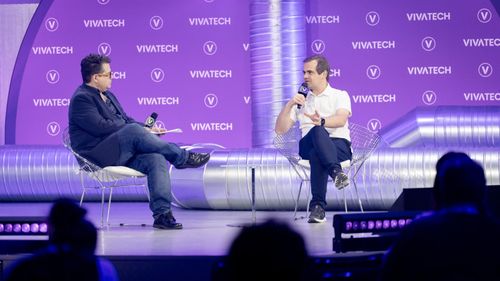
At VivaTech 2025, three experts took to the Black Stage to explore what work looks like now and what’s coming next.
- Luke Armstrong, Regional President EMEA & APAC at WeWork,
- Anastasia Pshegodskaya, Director of Talent Acquisition at Remote
- Bianca Zwart, Chief Strategy Officer at bunq,
The New Remote Reality
Hybrid, fully remote, and digital nomads lifestyles now define much of the work spectrum. Hybrid is booming, over 100 million people already split time between home and office, a figure expected to rise. Proven benefits include: higher retention, satisfaction, and reduced costs. For Armstrong it's the sweet spot that values flexibility and in-person culture. in-person culture.
I think to truly build culture, I think you need to do that in person.” He said. “I think companies are grappling with how they bring people together because they know they need it, because it does something that you can't do when you are entirely nomadic.
Fully remote, online employees based in one location may not be the pandemic norm anymore, but it’s far from fading. Around 16% of US companies operate with no office at all. That's 5x more than pre-pandemic levels. The benefits include reduced stress and higher productivity levels. Pshegodskaya runs a 2000+ person team that’s 100% online. But there’s one rule: employees must spend nine months per year in one home base.
Digital nomads play by different rules, working remotely while traveling. This has been gaining popularity as countries roll out digital nomad visas in countries like Spain, Hungary, and Estonia. This comes with its own challenges like time zones, taxation, and work-life balance. Zwart says that this style is good for companies whose clients are mostly digital nomads, like bunq, “If you want to roam the world and live like our users. So you can actually understand what it is like, so you can build better products.” While digital nomadism is an option at bunq, they still maintain an Amsterdam office.
Redefining Company Culture
The panelists agreed that the company culture for a remote company is fundamentally different from that of those who are in person daily. Zwart and Pshegodskaya commented on the strong culture of documentation in their companies. This makes things clear across time zones, Zwart says in her company, “Meetings are not to share information, they are to make decisions.”
At Remote, the key to keeping everything running smoothly is structure and intentionality. Pshegodskaya brings up the intensive onboarding process that fully integrates employees without a single day in the office. She also believes that keeping employees connected outside of work talk is essential, and at Remote, they have multiple programs that support informal conversation and community building. Programs like this are essential as remote workers report higher levels of loneliness and emotional distress than hybrid or in-person peers.
Armstrong echoes Zwart’s comments, you must be able to connect to your clients and their needs. In WeWork’s case, they offer office space, so in-person presence aligns with their product. “You shouldn't be shocked that we expect you to be in the products you're trying to sell.”
Rethinking the Office
Globally, the office space market is valued at around 3.1 trillion USD, and with changes in the way we work, this industry must adapt to stay relevant. Armstrong notes that traditional metrics used to gauge space needed are outdated, and companies must focus on simplicity and flexibility.
He points out one major issue in getting people into the office: employers are competing with highly personalized home offices. To combat this, he thinks companies must be more intentional about their office space. If a company focuses on group collaboration, then open spaces might be better suited than closed-off offices. The second point he finds crucial is giving the employees a good reason to be in the office, explaining “the why” of in-office work.
Limitations of Remote Work
While remote and hybrid are growing in popularity, there are still clear limitations on who can, or should, be remote. But companies like bunq are challenging the belief that traditionally in-person industries can’t be online.
I don't know if there are roles that shouldn't be remote.” Zwart said, “I think as an example, in the traditional banking industry for decades, we also assume that would never change, right? That would never be remote. And here we are.
However, Zwart mentioned her frustration with the technology and adjustment from country to country not being as seamless as she would hope; even simple cross-border transfers can still be slow or costly.
The panel also touched on the threat that AI has on remote jobs, but they did not seem concerned. Zwart said she has not seen a trend of remote workers being replaced by AI; she believes AI will take over more of the output, but humans will remain in control of the outcome. Pshegodskaya says remotes jobs are no more at risks than in-office jobs,
If you're going to the office and do you think that your role won't get automated or changed by AI, I think that you're in big trouble already.
Armstrong believes that AI will change jobs but not replace them; new jobs related to AI will emerge to replace the ones being automated. This aligns with current predictions that AI will make 92 million jobs obsolete but create 170 million new jobs.
Moving Forward
At the end of the session, the speakers gave their key advice for remote workers to stay visible and prove their worth, and the consensus was to focus on solving the right problems effectively.
Want more like this? Check out Where We Work Now!
Get more insights on the future of work and productivity live at VivaTech 2026. Get your pass now!