As governments and private companies accelerate investment, a new question is emerging: can Europe build the capabilities it needs to compete in the new space race?
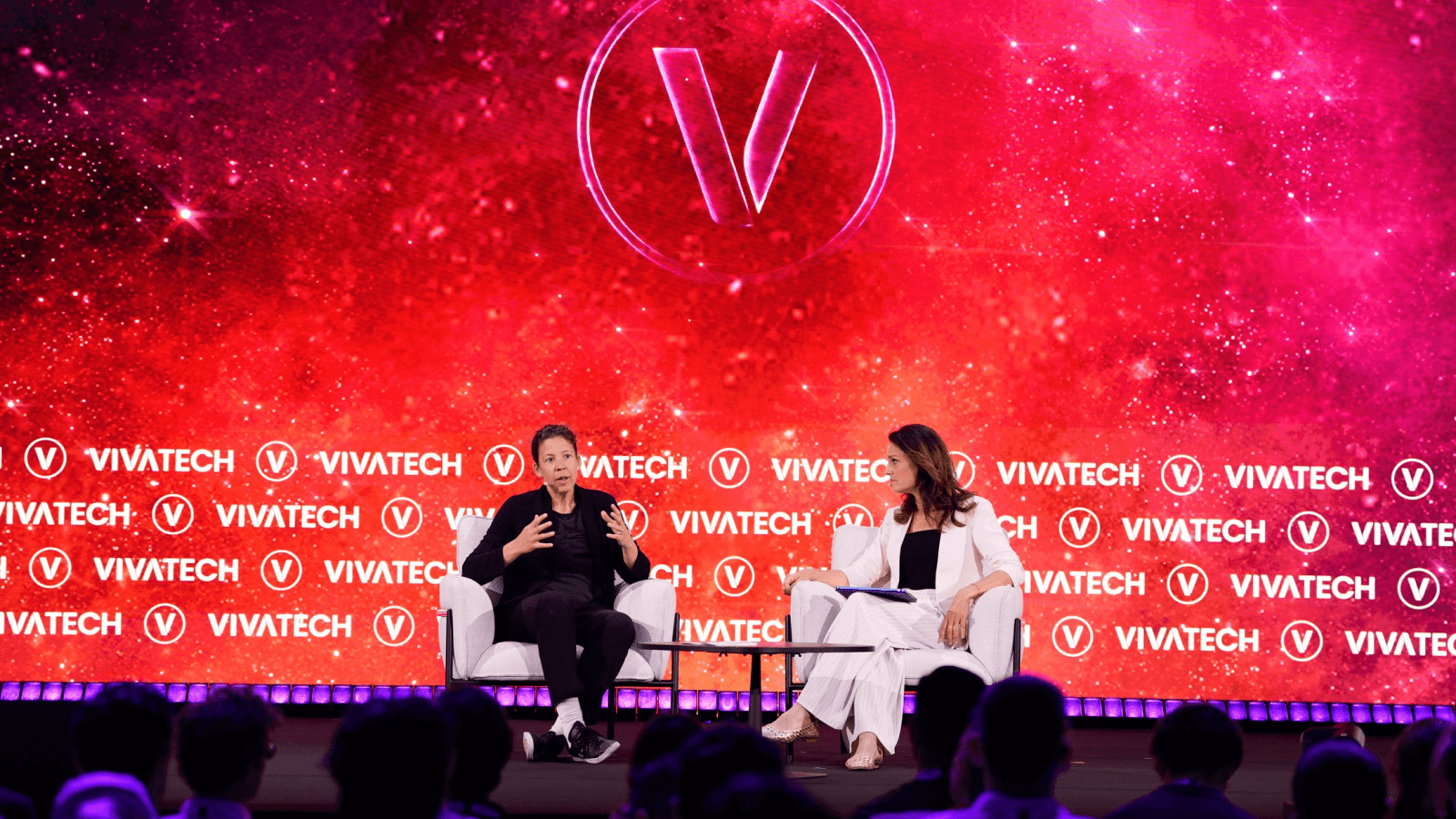
That was the focus of the VivaTech 2026 session The Next Frontier: Building Humanity's Future in Space, where Hélène Huby, Founder and CEO of The Exploration Company, shared her vision for Europe's future in orbit. From sovereign launch capabilities to reusable spacecraft and long-term investment, her message was clear: Europe has the talent, the technology, and the opportunity. The challenge now is moving fast enough to seize it.
Building Europe's Independent Space Capability
Huby arrived on stage fresh from a major announcement by the French government. Minister Roland Lescure had just unveiled the Tibi 3 initiative for European deep tech, coordinated with Germany's WIN scheme, designed to unlock more private investment for innovation.
She welcomed the announcement enthusiastically.
"We are very rich in Europe, we have a lot of savings, but that saving is not always invested in startups...This initiative made me very, very happy."
Founded less than five years ago, The Exploration Company has taken a different approach from many of its competitors. Rather than building a rocket first, the company chose to develop the capsule.
For Huby, the reason is both economic and strategic.
"Every year we pay half a billion to our dear friends in the United States to fly our astronauts. I think it would be great to keep that money and build up technology here."
The company has already flown two prototypes, secured €2 billion in contracts in under five years, and plans to launch its operational cargo capsule to the International Space Station in 2028. Just days before VivaTech, it also unveiled a model of what Huby described as Europe's largest rocket engine.
The ambition extends well beyond today's launch vehicles.
"When you build a house, you don't start with the windows, you start with the foundation. No big rocket engine, no big rocket."
Building that future also depends on attracting the next generation of engineers.
Space, Sovereignty, and European Competitiveness
For Huby, Europe's space ambitions are inseparable from its ability to protect its future.
The Exploration Company already operates across Germany, France and Italy, while expanding into Spain, reflecting her belief that collaboration is one of Europe's greatest strengths.
"We live today in peace within the European Union because we've shared military technologies between the nations."
Recognizing that much of today's space technology has dual-use applications, she argued that continued cooperation is essential.
"If we are serious about protecting peace and democracy in Europe, we need to continue to share military technologies across countries."
She also challenged the assumption that Europe cannot compete on cost.
"It doesn't cost 10 times more to build an Airbus than a Boeing. We shall not accept to be not competitive, especially when a European space engineer costs half an American one."
Why Europe's Opportunity Is Now
Huby believes Europe already has the ingredients needed to build a globally competitive commercial space industry. What is needed now is sustained public demand that allows private companies to scale.
She pointed to the company's first €25 million contract from the European Space Agency as proof of the model.
That initial contract, she explained, enabled The Exploration Company to raise €250 million in private investment.
Looking ahead to key political decisions later this year, she had one clear request.
"I have one wish, that we decide to build human spaceflight capability in Europe."
For Huby, three conditions have aligned at exactly the right moment: Europe's technical expertise, growing commercial demand from NASA for additional crew transportation, and unprecedented levels of private capital flowing into space.
She warned that the opportunity may not come again.
""It's rare and it's a privilege to be able to write space history...I am not sure these three factors will represent themselves in the next 50 or 100 years...This is the moment to seize for Europe."
Europe's next chapter in space will not be defined solely by rockets or spacecraft. It will depend on whether governments, investors, and industry can work together to transform technical excellence into long-term industrial leadership.
Want to hear the full discussion? Watch the replay of The Next Frontier: Building Humanity's Future in Space. Then join us at VivaTech 2027 as the world's leading founders, researchers, and policymakers continue exploring the technologies shaping humanity's future on Earth and beyond.