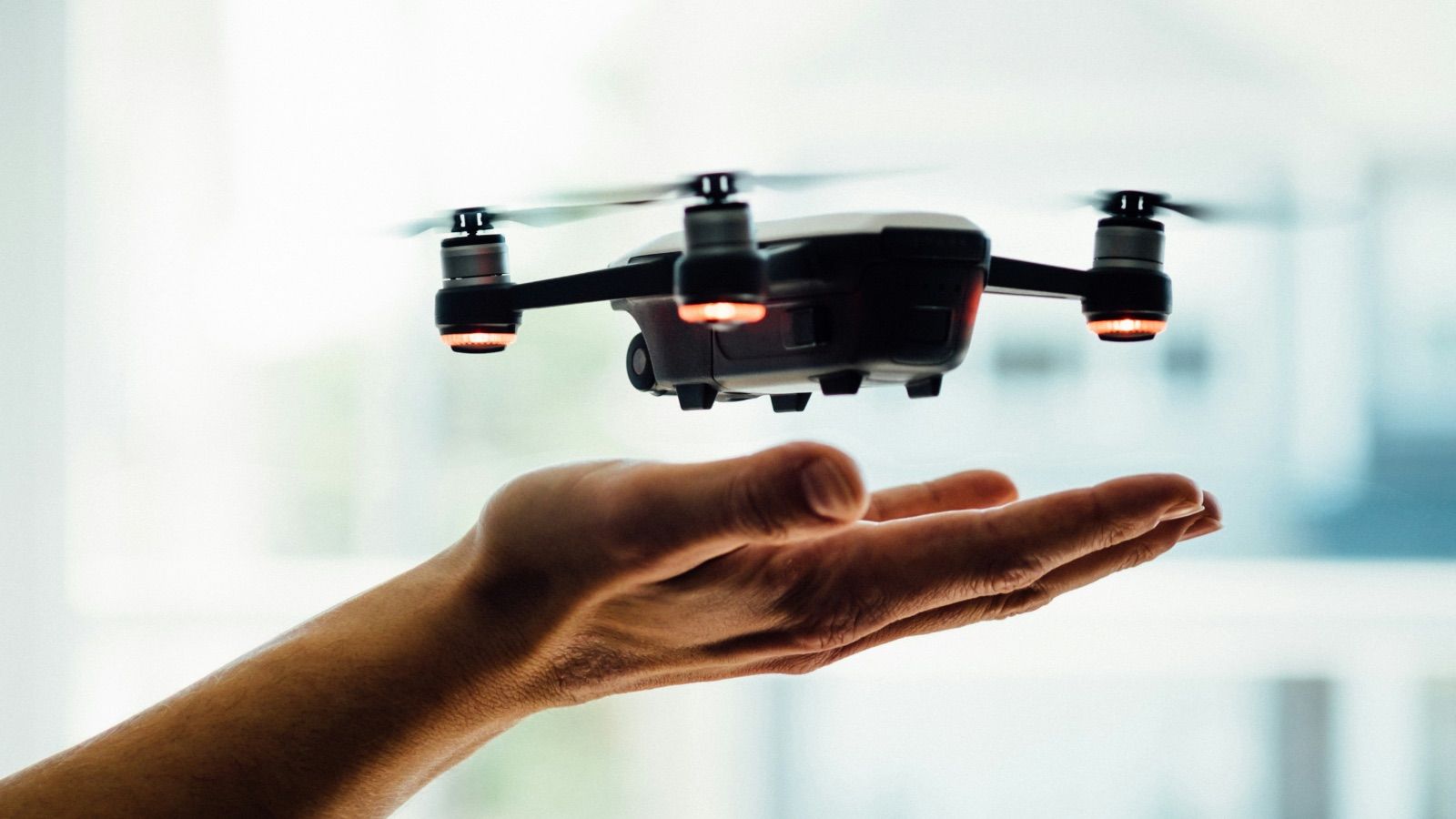
Autonomous drone technology allows unmanned aerial vehicles to operate with minimal or no human control. Using AI, sensors and advanced flight software, these autonomous drone systems are increasingly deployed for industrial inspection, mapping, surveillance and logistics. But while autonomous drones can improve efficiency, safety and data collection, they also carry regulatory and operational challenges for global airspace management. Read on to learn how this new generation of drones works, the companies leading development of autonomous drones, and which industries are adopting the technology.
What Is an Autonomous Drone?
An autonomous drone is an unmanned aerial vehicle (UAV) capable of performing missions without constant human piloting. Instead of relying on a remote operator for every move, these drones use onboard software, sensors and artificial intelligence to navigate, analyze their surroundings and perform tasks.
How They Differ from Traditional UAVs
Traditional drones require continuous human control through a remote controller. They may have automated features such as stabilization or GPS-assisted flight, but a human pilot still guides the drone during its mission.
Autonomous drones on the other hand, can plan and complete operations independently once a mission is programmed. The system can automatically adjust its route, avoid obstacles and collect data without direct human input.
Because trained pilots aren’t required for every task, companies can deploy fleets of drones with minimal supervision, expanding the potential uses of drone systems.
Key Technologies Behind Autonomous Flight
A combination of technologies work to power autonomous drone technology:
- AI and machine learning interpret data and make decisions
- GPS and satellite navigation enable precise positioning
- Computer vision uses digital images to identify obstacles and analyze environments
- Advanced sensors like LiDAR, radar and cameras can measure ranges and distances
- Flight control software manages stability, routing and mission execution
When used together, these systems allow drones to operate safely even in complex environments.
How Autonomous Drones Work
Autonomous drones work using a combination of hardware and software systems that continuously process information during flight.
Sensors, Software and Onboard AI
Autonomous drones collect data from multiple sensors such as cameras, LiDAR scanners, infrared sensors and GPS modules to feed data to onboard processors. AI can then analyze this data in real time. A drone’s software can detect obstacles and map terrain to choose the safest route to its destination.
For example, a drone inspecting a wind turbine can automatically adjust its path to maintain optimal distance from the turbine's blades while recording images for maintenance analysis.
Levels of Autonomy
Not all drones operate with the same level of independence. Drone autonomy can be categorized into several levels:
- Assisted flight: Human pilots control the drone but receive automated support such as stabilization or obstacle warnings.
- Semi-autonomous flight: The drone can follow pre-programmed routes or complete certain tasks automatically.
- Fully autonomous flight: This is when a drone plans and executes missions independently using onboard AI and sensors.
Most commercial systems on the market today fall into the semi-autonomous category, though fully autonomous capabilities are advancing rapidly.
Applications of Autonomous Drone Technology
Militaries make up the biggest share of the global drone market, but autonomous drones are being adopted by a growing number of industries. This is largely driven by drones’ ability to fly efficiently and safely in places that may be difficult or dangerous for humans.
Industrial Inspection and Monitoring
One of the most valuable uses of autonomous drone technology is infrastructure inspection. Drones can monitor power lines, pipelines, wind turbines, bridges and construction sites, while capturing high-resolution images and sensor data.
Autonomous flight allows these drones to conduct inspections regularly without the need for human pilots each time. This reduces costs while at the same time improving safety and infrastructure maintenance.
Surveillance and Security
Security agencies and companies can use autonomous drones to patrol designated areas, flag unusual activity and transmit real-time video feeds.
These drones’ capacity for continuous surveillance of large areas makes them especially useful for border control, event security and critical infrastructure protection.
Mapping and Data Collection
Autonomous drones are also widely used for mapping and surveying in industries like mining, agriculture and urban planning.
Drones can quickly capture aerial data that would otherwise require large ground surveys or manned aircraft. The images collected can then be turned into detailed 3D maps and models.
Delivery and Logistics
Logistics and shipping companies are investing in drone technology to speed up last-mile delivery. In remote areas, autonomous drones can transport packages, medical supplies or equipment much faster than ground vehicles.
Autonomous drone delivery technology is being developed alongside autonomous delivery robots, which are also transforming ground logistics.
Military and Defense
Militaries have long relied on unmanned aerial systems for reconnaissance and intelligence missions. Autonomous drone systems are able to operate over large areas while reducing risk to human personnel.
In a defense capacity, autonomous drones can help with surveillance, mapping and monitoring government missions.
Benefits of Autonomous Drones
When compared to traditional drone operations, autonomous drones offer several advantages:
- Improved efficiency: Automated flight allows for more frequent inspections or monitoring without requiring pilots each time.
- Enhanced safety: Drones can perform tasks in dangerous places such as disaster zones, war zones, at high-altitudes or inside industrial sites.
- Scalability: Companies can deploy large fleets of drones simultaneously to maximize coverage.
- Data accuracy: Autonomous flight paths provide more consistent data collection, which is especially important when monitoring infrastructure or environmental changes over time.
These benefits are why startups, large companies and governments alike are investing heavily in the development of advanced unmanned aerial systems.
Regulations and Safety
Drones are required to adhere to strict regulations designed to ensure airspace safety. FAA Rules and Requirements
In the United States, drone operations are governed by the Federal Aviation Administration (FAA). Drone operators must comply with rules including:
- Maximum altitude limits
- Line-of-sight operation
- Drone registration
- Commercial pilot certification
- Authorized airspace use
Drone operations involving the transportation of hazardous materials or flight near airports require additional approval from aviation authorities.
The Global Regulatory Landscape
Drone regulations vary widely between nations with no agreed global baseline. There are many organizations regulating drone operations in the European Union, depending on where, how and what a drone is flying. Countries including the UK are experimenting with designated drone corridors or airspace zones that create operating lanes specifically for commercial drones.
In 2017, the government of Malawi and UNICEF opened Africa’s first drone testing corridor for the use of drones in humanitarian emergencies.
Safely integrating autonomous drones into existing air traffic systems is an ongoing process, but government buy-in and regulation will play a major role in determining how quickly the technology can expand.
Leading Companies in Autonomous Drone Technology
Major technology firms, defense contractors and startups are developing advanced platforms for autonomous drones. Here are a few of the sector leaders:
DJI: The global leader in commercial drones, Chinese company DJI has developed advanced autonomous flight features for use in industrial inspection, public safety and surveying.
Wingcopter: The German aerospace company’s Wingcopter 198 is designed for logistics and surveying with a high level of autonomy. Wingcopter demoed its autonomous delivery drone at VivaTech, showcasing how it can be used to transport medical supplies and goods over long distances.
Skydio: A pioneer in fully autonomous drone technology, Skydio’s Autonomy technology can independently plan and execute the best flight path for drones using sophisticated computer vision and AI.
Other notable players in the autonomous drone space include Parrot, Zipline, Autel Robotics, Airobotics, Wing, and AeroVironment.
The coming years will test how drone manufacturers can work with industries and regulators to integrate autonomous drones into shared airspace. The rise of autonomous drone technology in the military, enterprise and humanitarian spaces make it clear that autonomous flight will soon become part of our everyday lives.
To see the future of autonomous drones and AI for yourself, join us at the next edition of VivaTech in Paris!