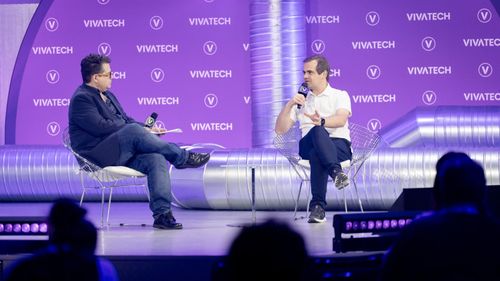
As governments, businesses, and individuals navigate an increasingly connected world, one question has become central to digital sovereignty: who controls your digital identity? The rise of digital identity blockchain solutions promises to shift control away from centralized platforms and back to users themselves. But how does the blockchain actually work in identity management, and what does it mean in practice? This article explores the fundamentals of blockchain-based digital identity, its benefits, risks, and real-world applications across industries. As VivaTech celebrates its 10th anniversary, these conversations around trust, infrastructure, and digital sovereignty are more relevant than ever.
What is a digital identity?
A digital identity is the online representation of a person, organization, or device. It can be anything; login credentials, transaction history, biometric data, government IDs, etc. Today, most digital identities are stored and controlled by centralized organizations: companies, banks, governments, or service providers. While it’s convenient, this type of model can create some risks in a data breech or in the level of user control, which could be limited. These issues raise concerns in discussions around digital sovereignty, data ownership, and autonomy.
How blockchain transforms digital identity
Blockchain is a type of technology that records information across many computers instead of keeping it in one single place. This makes the system harder to hack or change. In a digital identity blockchain system, different parts of the network help confirm that your information is valid. The key shift is from centralized management to self-sovereign management. In a blockchain-based model, users can hold their own credentials, issued by trusted institutions, in a digital wallet. Verification happens without exposing unnecessary information because blockchain stores proofs of validity, not someone’s raw personal data. For example, instead of sending a passport scan to verify your age, a blockchain credential could just confirm if you are over the required age or not without revealing the name, address, ID number, or exact age. By minimizing reliance on centralized platforms, blockchain identity systems aim to return control to users while keeping high levels of security and trust.
What industries can benefit from blockchain digital identity solutions?
Blockchain-based identity is not simply limited to cryptocurrency platforms. Its practical applications can be across multiple sectors.
Financial services Financial services are among the most immediate beneficiaries. Login and authentication systems need repeated identity checks across banks and fintech platforms. Blockchain credentials can speed up onboarding by allowing customers to share verified information instantly, reducing administrative burdens.
Healthcare Healthcare systems can also benefit. Patients often struggle with scattered medical records across institutions. A blockchain-based identity framework could help put in place secure user-controlled access to health data while staying private.
Government Governments are exploring digital identity solutions to modernize public services. Secure digital IDs could simplify access to voting systems, tax services, and social benefits while also improving cross-border recognition. These efforts relate directly to larger debates on sovereignty and digital infrastructure, themes regularly addressed onstage at our tech event in Paris.
Education Universities and other school systems could issue safe, fraud-proof diplomas and certifications. Employers could then verify credentials instantly without going to the issuer to check.
Online platforms & gambling In sectors like online gambling and betting, blockchain identity can improve age verification and anti-fraud systems. This intersects with emerging discussions on responsible gambling tech trends, where digital sovereignty and user protection are increasingly central.
What are potential risks associated with blockchain identity management?
Despite its advantages, digital identity blockchain tech doesn’t come without its challenges. Regulatory uncertainty is still an issue. Data protection laws vary across jurisdictions, and blockchain’s cross border architecture can complicate how it interacts with privacy regulations. Key management is another risk. If a user loses access to their private keys without good a recovery system, they could permanently lose access to credentials. Designing systems that balance decentralization with easy, practical recovery options is important. Scalability is also a concern. Public blockchains could struggle with high transaction volumes, and transaction costs can vary. Identity systems need to make sure that verification processes stay fast and affordable for widespread adoption. The permanence of blockchain technology, often seen as a strength, can also pose problems. If sensitive information is recorded wrong on a key, it could be impossible to change or remove.
The future of digital sovereignty
Digital identity is becoming a strategic asset in the global economy. Control over identity systems determines access to things like financial services, healthcare, employment, voting, etc. For these reasons, digital sovereignty has moved towards the front of tech policy discussions. Blockchain is a compelling framework for managing personal control and strengthening trust in the digital world. By using self-managed credentials and decentralized verification, it challenges the dominance of centralized platforms. However, technology alone doesn’t guarantee sovereignty. Good governance, high standards, clarity, and public trust are all just as important. Events like VivaTech demonstrate that collaboration between startups, corporations, governments, and researchers is essential to building secure and inclusive identity systems.
As we celebrate 10 years of VivaTech, it’s the perfect moment to join the conversation shaping the future of digital identity, blockchain, and sovereignty. Secure your VivaTech pass and help define how trust and technology will evolve in the years ahead.