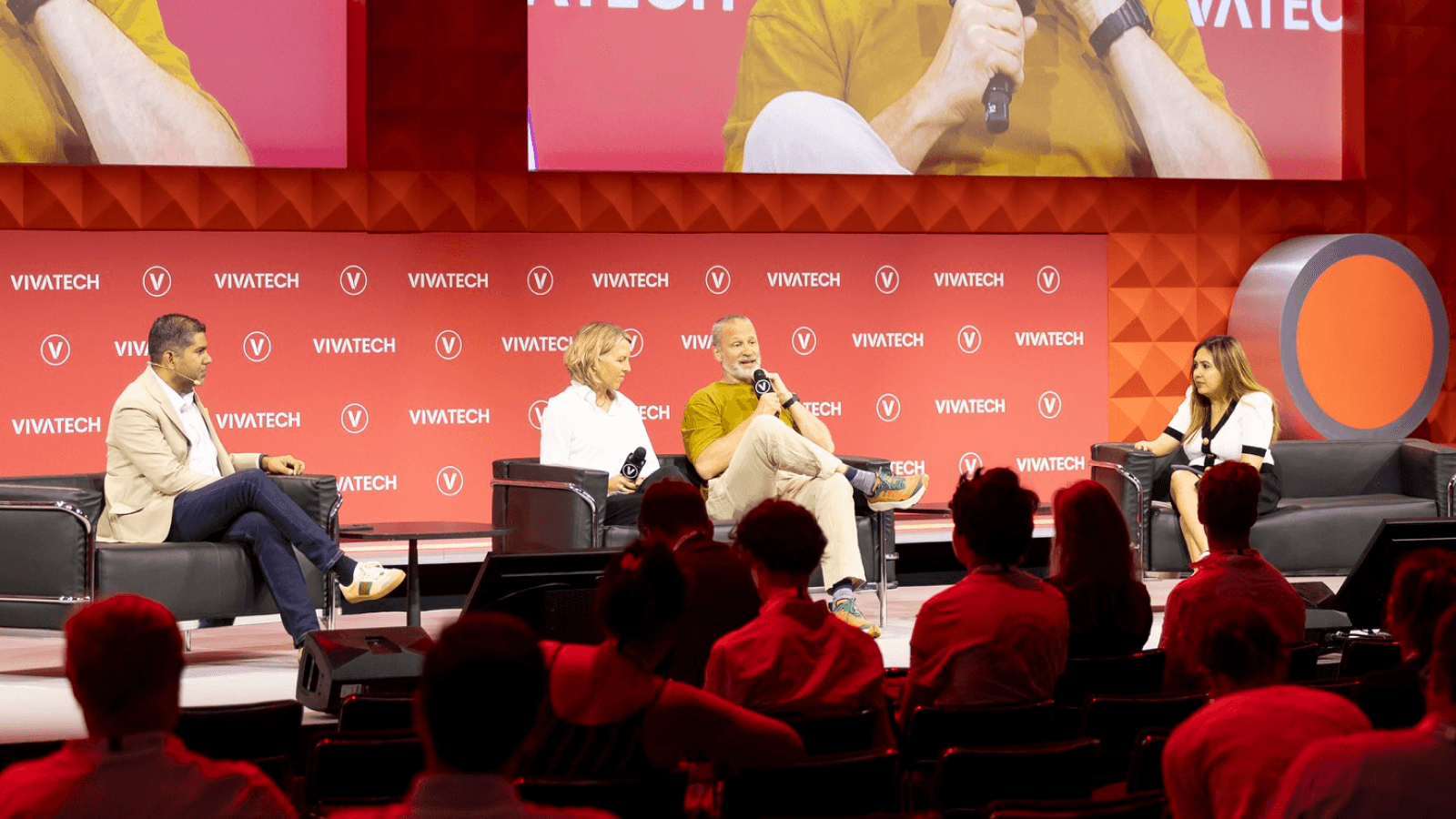
For years, sustainability has largely been framed as a responsibility. At VivaTech 2026, the discussion shifted toward something different: growth.
That was the focus of the session Impact at a Crossroads: Reinventing Sustainability for the Next Decade, where Akansha Dimri, Founder and Editor-in-Chief of Tech Funding News, brought together David Ekelund, Chief People Planet Profit Officer of Icebug, Kate Williams, CEO of 1% for the Planet, and Ashish Puri, Partner at growth equity firm Lightrock to explore how sustainability is evolving from corporate responsibility into a driver of business strategy, innovation, and long-term growth.
From ESG to Growth
Kate Williams believes progress is real, even if it has become less visible. Since joining 1% for the Planet a decade ago, membership has grown from around 1,000 companies to 5,000, directing nearly $900 million to environmental nonprofits, including 50 million in the past year alone.
"Simple actions done repeatedly in community are how we change the world."
At the same time, she argued that the sustainability conversation has changed. Rather than exaggerating their environmental credentials through greenwashing, many companies are now choosing not to talk publicly about genuine progress for fear of criticism, even as some major organizations scale back their climate commitments.
For Ashish Puri, the next decade represents a much bigger shift.
"In the last 10 years, ESG was a checkbox exercise.The next 20, maybe even 30 years, it will be a growth opportunity."
He pointed to an estimated 0 trillion sustainable economy and argued that investment is increasingly moving beyond emissions reduction toward climate adaptation, from wildfire prevention technologies to more resilient buildings and infrastructure.
Rethinking the Rules of Business
For David Ekelund, the discussion extended beyond sustainability reporting or investment trends. It challenged the assumptions on which modern business has been built.
"We need a new brief for capitalism…The brief we had was fine for when we were a small society on a huge planet, but now we're a huge society on a small planet."
At Icebug, that philosophy influences business decisions directly. The company measures environmental impact per use rather than per sale and refuses to create artificial scarcity simply to encourage more consumption. Ekelund also committed to sharing future AI-driven productivity gains with employees through additional time off rather than reducing headcount, once profitability exceeds 15%.
The discussion reflected a broader shift taking place across industries. Sustainability is increasingly being viewed not as a compliance exercise, but as a catalyst for redesigning products, business models, and incentives.
The Next Century of Sustainable Growth
The panel closed by looking beyond today's challenges toward the economic systems of tomorrow.
Puri pointed to the rapid growth of circular business models, from resale platforms to new approaches to packaging and resource management, arguing that sustainability will increasingly become embedded within how businesses create value.
"The industrial revolution was about exploiting nature. The next hundred years is going to be about how we rebuild nature whilst we grow."
The discussion made one thing clear. Sustainability is no longer simply about reducing harm. Increasingly, it is becoming a question of how businesses innovate, compete, and grow in a world where environmental resilience is part of long-term economic success.
Want to hear the full discussion? Watch the replay of Impact at a Crossroads: Reinventing Sustainability for the Next Decade, then join us at VivaTech 2027 to discover how business leaders, entrepreneurs, and innovators are shaping the next generation of sustainable growth.


