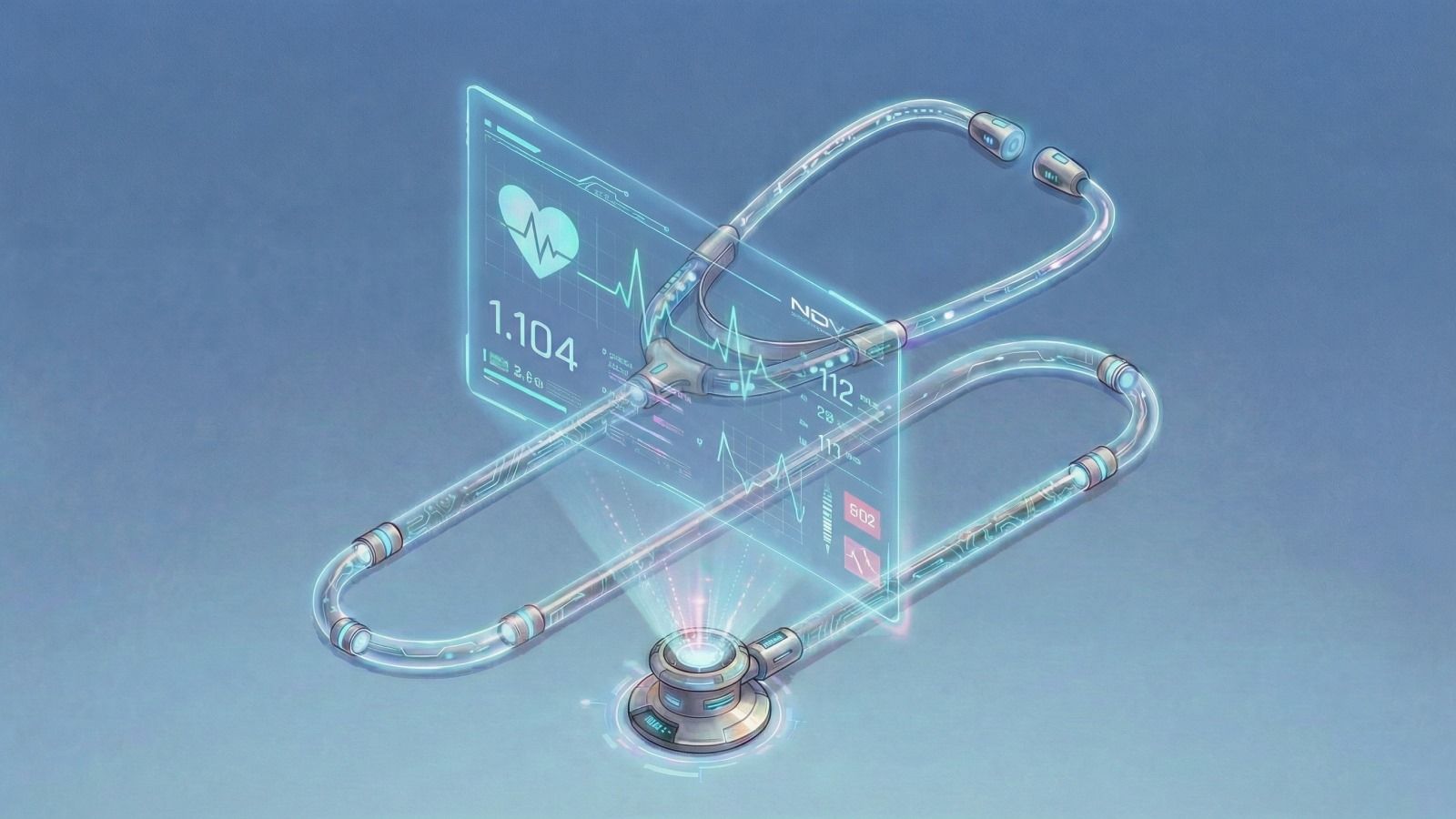
 In 2016, digital health technology was a buzzword on conference slides. In 2026, tech and AI is becoming embedded in almost every moment of your day as a doctor.
Shifting focus from screens to patients
In 2016, many doctors felt like they were working two jobs: clinician and data‑entry clerk. You likely spent half of every check-up with your eyes glued on the screen, typing frantically to update the records while keeping up with the conversation. Now in 2026, those check-ups have changed thanks to AI scribes which have become a routine part of practice in some digital health systems. While not every clinic has transitioned yet, this technology is rapidly becoming the new emerging normal for the modern practitioner. An AI scribe is now you’re silent backup, listening to the conversation and writing for you while you can focus on the patient. By the time you leave the room, the system has already drafted a structured note for your review, set up the information for the next appointment, and you’ve saved about 15,000 hours a year.
From reactive to proactive care
The way you manage the floor has shifted from being reactive to predictive. In 2016, a lab result had to land on your desk or, worse, a patient had to take a turn for the worse before you could make your treatment plan. Now, the floor is managed by agentic AI; autonomous systems that function like a continuous engine. Though adoption is still scaling globally, these tools are establishing a baseline of care that will soon be universal. It collects real-time data for you from wearable sensors and electronic health records (EHRs) to track things like heart rate, respiration, and oxygen saturation, flagging the earliest whispers of failure long before the patient feels it. For example, in breast cancer detection, you used to rely on double reading (two radiologists looking at the same mammogram to reduce error), but some things would still be missed. In 2026, AI supported mammography can reduce the rate of breast cancer diagnosis by 12%. Technology like TheraPixel’s MammoScreen, who exhibitioned at VivaTech 2025, acts as a tireless digital second reader.
Gene-based decision making
Precision medicine is no longer a niche luxury but is soon to become the baseline for every prescription you write. You likely recall how much you used trial-and-error methods back then, where you’d prescribe a standard dose of a medicine you believed would work and hope there would be no unforeseen effects with the patient. Today, pharmacogenetics (PGx) is an increasingly standard part of the patient’s chart in areas like oncology (cancer medicine) and mental health. While some regions are still catching up to this standard, it is clear that personalization is the future for many doctors. If you prescribe a medication that clashes with a patient’s DNA, like an antidepressant that a gene would metabolize too slowly, the system flags it down. This ensures the very first dose you give is the right one for that patient’s unique genetic makeup.
The virtual hospital model
One of the biggest differences from then to now is how the hospital has expanded into the patient’s living room. In 2016, managing illnesses like congestive heart failure was a defensive game; by the time a patient showed up it was usually already a serious issue. Today, your high-risk patients use “invisible” sensors that beam internal pressure data right to your dashboard while they’re sipping their morning coffee. This “hospital at home” shift is the new emerging normal, moving from niche pilot programs to standard practice for patient monitoring. Instead of a 2:00am ER admission, you get pinged on a quiet afternoon: the system has noticed a tiny rise in lung fluid that it predicts a crash is coming in the next couple of days. You send a text, load up VRAI-Heart (a 3D, individualized heart imaging software), and hop on a quick call; and just like that you’ve prevented a week-long hospitalization.
The next hurdles to conquer
However, these advances bring a new set of hurdles that legal and ethical frameworks from even a decade ago weren’t built to handle. As we hand more decision-making power to algorithms, the question of who remains liable becomes a central tension. If an AI copilot misses a diagnosis or suggests a medication that leads to harm, the chain of responsibility between physician and developer is still a bit of a grey area in the courts. And, as the virtual ward grows, we have to make sure high tech care doesn’t replace real human empathy. Digital health technology continues to improve efficiency, but the next challenge to tackle will be to ensure the next decade’s medicine is as ethical as it is intelligent.
Reserve your place now with our Super Early Bird deal (cheapest deal of the year) to hear more from leaders in health tech.