Key takeaways |
|---|
|
There are more than 7,000 languages in the world today, yet UNESCO estimates that nearly 50% of the world’s population is still monolingual. As the world becomes more globalized, cross-border communication has become critical for businesses to grow. Making multilingual work seamless has become a key sector of the tech industry, with companies that can deliver these services worth billions.
Types of Translation Tech
Translation technology is not one-size-fits-all. Companies take a variety of approaches to eliminating language barriers. We explore the main approaches used by tech companies today.
Live Translation Earbuds
The solution that looks like it was taken directly from science fiction, these earbuds can enable instantaneous translation and allow for a natural conversational flow across languages. Mymanu first launched the technology in 2016, and it has developed significantly in the 10 years since.
Today, hundreds of products are available on the market, ranging from under €50 to nearly €1,000, and translation services are being integrated into more standard earbuds. With Apple Intelligence, several types of AirPods can become live translation devices. The same applies to Google’s Pixel Buds and Samsung’s Galaxy Buds.
This approach relies on audio translation and works best for spoken conversations or phone calls rather than messaging or document translation.
One-to-Many Translations
While earbuds can be a good choice for one-to-one or small-group conversations, they can be impractical on a larger scale, such as during global events and keynote presentations. This is where the one-to-many model thrives, taking one main speaker or their content and translating it live into a variety of languages for the audience.
This is the model VivaTech uses to make sessions accessible to people from around the world. While sessions are hosted in English, we partner with Ohaio to offer translation services in a variety of languages that participants can access on their phones. The French startup offers services for large events, keynotes, webinars, and training sessions.
Written Translation
Perhaps the most traditional form of language translation, this software converts documents and written text from one language to another. While this might seem simple, the technology behind it is anything but. Modern translation tools are mostly powered by AI and large language models, which have revolutionized the way translation tech works by offering faster, more accurate translations in more languages than ever before.
One of the leaders in the Language AI space is DeepL. The German company, which launched in 2017, has taken the tech scene by storm and is currently valued at more than €2 billion. DeepL uses neural machine translation and large language models trained on proprietary translation data to offer translation into more than 100 languages. Its models have outperformed nearly all other translation services, including chatbots, with a 94% win rate in head-to-head matchups.
The use cases for translation have changed significantly since LLMs gained traction. Modern translation software is not just about copying and pasting an email into a text box. It has grown to support delicate and specialized work across businesses and industries. In an interview with Jarek Kutylowski, Founder and CEO of DeepL, he said: It is not about translating a couple of simple documents anymore. It is about the most critical kinds of technical R&D documentation. It is about plane maintenance records that are being translated with technology, like DeepL’s.
But excellent document translation is not enough to be a standout company these days. As competition grows and easily accessible LLMs become commonplace, companies must offer a variety of services to stay competitive. DeepL announced during VivaTech 2027 an integration of San Francisco-based company Mixhalo to continue improving its new DeepL Voice technology.
Industry Challenges
The global AI language translation market is forecast to be worth around 3.5 billion by 2033, but this growth also presents challenges.
Highly Competitive Landscape
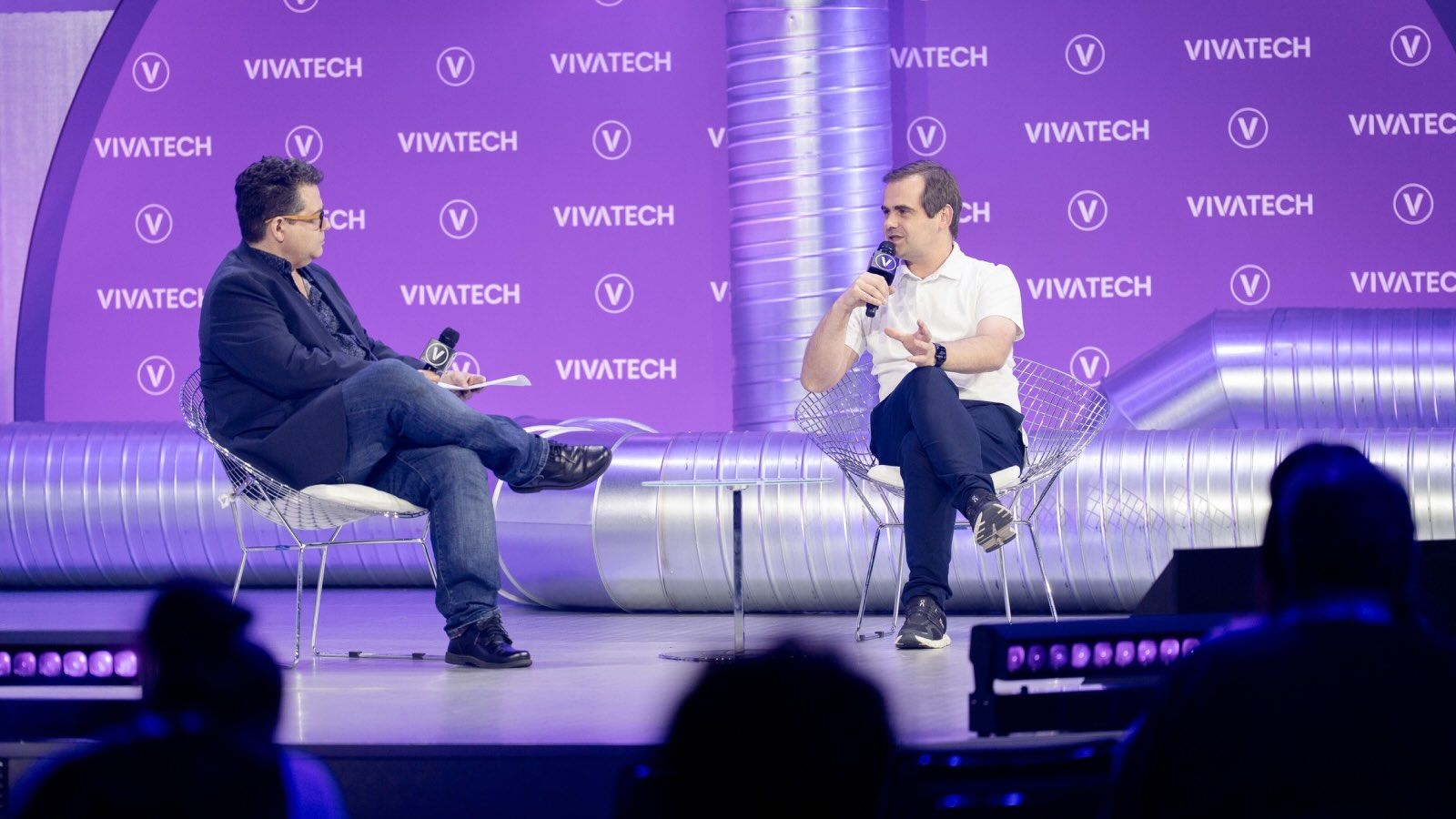
In the past few years, the AI translation industry has boomed, with many newcomers entering the market and creating stiff competition for established companies. In a session at VivaTech 2026, Kutylowski discussed the rise in competition:
Really, there was not that much competition in the AI market, so you did not have to make that elevator pitch. You just brought out a great product, and people started using that. I think the situation for everyone in the market is different right now. There is just so much AI out there. There is so much being built, and that is great by nature. I think we are creating a lot of value in the market overall. But it obviously also means for a company like ours that the pitch needs to exist, at least.
The variety of products coming to market is easy to see. Earlier this year, Slator published a roundup of the 50 Language AI Companies Less Than 50 Months Old, showcasing the highly competitive field. These startups are not only facing competition from established companies such as DeepL and Google Translate, but also from people turning to chatbots such as Claude and ChatGPT for their translation needs.
Beyond the stiff competition, entering the market can come with high costs. On the VivaTech stage, Kutylowski reflected on the change in cost compared with when his company launched in 2017: “You put in a couple hundred thousand euros, maybe, into the computing infrastructure and the creation of a new model. That is more on the order of millions, tens of millions, and maybe hundreds of millions nowadays.” With high costs, companies must establish the business case and decide whether the ROI is worth it.
Data Security and Privacy
With digital sovereignty and cybersecurity emerging as key themes across the VivaTech stages, data privacy in translation services must also be addressed. Because AI translators may process company meetings, private documents, and personal information, their security is a crucial factor in establishing trust with customers.
In the 2019 Statoil data leak, employees used a free online translator to translate sensitive documents, making the information in those documents available through a simple Google search. Under GDPR, mistakes like this can be very costly for companies, in addition to the harm leaked information may cause.
Maintaining compliance and protecting data are key issues for translation tech. They are also major reasons to use a dedicated translation service instead of general chatbots, which research has shown can be tricked into disclosing confidential documents. Having a system companies can trust is the backbone of the AI translation industry.
“I think the overwhelming need for all of our customers is to get a solution which they can trust. And that is always a tricky question with AI,” said Kutylowski. “What use case is it sufficient for? Is this technology already there to solve this particular application? This is something that each customer has to find out on their own, and we also have to assist them and help them figure out what the quality level is right now.”
Looking Forward
The past 10 years have brought major disruption to the translation space, and this shows no signs of stopping. With new companies and technologies emerging constantly, translation technology will continue to develop.
Low-Resource Languages
A current limitation of AI translation services is low-resource languages. Low-resource languages lack the datasets and language resources needed to train AI and natural language processing (NLP) systems. However, researchers and developers are working to create frameworks for developing high-quality datasets that can be used to produce more accurate and representative models.
A variety of privately supported and government-backed programs are being established to help protect these low-resource languages from digital extinction and provide better access for native speakers. UNESCO estimates that a language goes extinct every two weeks, making programs like these crucial to preventing language extinction and extending the benefits of AI to underserved communities.
Last week, more than 60 organizations, including ElevenLabs, Mistral, NVIDIA, and UNICEF, signed a five-year agreement to use their resources to make AI available to more than three billion people in their native languages. The press release states: “A group of 60 signatories are uniting behind a shared five-year goal: for an estimated 3.4 billion people who speak languages currently underrepresented in today’s AI models to be able to use AI tools in their own language and voice.”
This marks a promising step toward language equity.
Signed Languages
Signed languages have historically been underrepresented in translation software, as the most common translation services—text-to-text, text-to-speech, and speech-to-text—do not address signed languages in the same way. There are more than 300 different signed languages worldwide. Even countries that share a spoken language may use different signed languages, making language barriers more complex.
A major player in the signed language translation space is Rylo, formerly Nagish. The company started as a voice-to-text and text-to-voice program that allowed people who are deaf to make phone calls. It now supports text-to-sign translation in more than 40 signed languages. The company secured an $85 million funding round in June this year. Another company taking a different approach is Jordan-based Mind Rockets, which creates 3D avatars to present information in a variety of signed languages on websites and social media.
These companies, along with the many others working to make content accessible to people who are deaf around the world, show a promising future for using AI to improve language access.
An Accessible World
As AI language services continue to develop, they contribute to a more connected world by reducing language barriers. This technology helps companies expand, people connect, and cultures to be shared. When asked what excites him about the future of translation technology, Kutylowski said:
“I really am looking forward to a world where companies are not going to have to think about language at all. I want to create a system where, basically, as a company, you’re just thinking about the whole world as one place, and you can hire the best expert you want from anywhere in the world. I want each and every one of our customers to think about the whole world as a place where they’re selling.”
Get in on the Conversation
Discover conversations like this and meet the startups transforming industries in person at VivaTech 2027. Secure your place now.
FAQs |
|---|
What is translation technology?Translation technology uses software, artificial intelligence, machine learning, and language models to convert spoken or written content from one language into another. It includes translation earbuds, live event interpretation, document translation software, and tools for signed languages. |
Why is translation technology important for businesses?Translation technology helps businesses communicate with customers, employees, and partners around the world. It supports international growth by making meetings, documents, events, and other business content more accessible across languages. |
How is translation technology used at live events?Live event translation uses AI to translate a speaker’s presentation into multiple languages in real time. This is known as one-to-many translation. VivaTech uses Ohaio to provide multilingual access to sessions, allowing participants to follow presentations in their preferred language on their phones. |
What are the biggest challenges facing AI translation companies?The main challenges are intense competition, high development costs, data security, privacy, and translation quality. AI translation providers must also demonstrate that their systems are reliable for sensitive use cases, including technical documents, business meetings, research and development materials, and maintenance records. |
How will translation technology support low-resource and signed languages?Translation technology can support low-resource languages by helping researchers create better datasets and more representative AI models. It can support signed languages through tools that translate text or speech into signed communication, including digital avatars and other visual interfaces. These developments could improve access to information and AI for communities whose languages have historically been underrepresented in technology. |