If You Only Have 2 Minutes
- Narendra Modi, speaking as VivaTech's first ever AI Country Partner, pledged more than 50 billion dollars in incentives for Indian innovation and declared "for India, AI means all inclusive."
- Joe Tsai of Alibaba told Europe to stop putting all its eggs in one basket, positioning Qwen, the world's most used open source model, as the alternative to an American "kill switch."
- OpenAI's Thibault Sottiaux said agent adoption is now growing faster in Europe than in the US.
- Aidan Gómez of Cohere argued the stakes are geopolitical, warning "we need to ensure that a democracy occupies the number two position, and that's not true today."
- DeepL announced its first ever acquisition, bringing on the team from US voice AI company Mixhalo to move into real time speech translation.
- C40 Cities' Hélène Chartier delivered the day's bluntest climate line, that "the 1.5 degree objective of the Paris Agreement is dead," reframing the fight around adaptation and retrofitting cities at scale.
The Day in Data
- 140,000 hours. Work Deel automated in its last 45 days using its Akai agent product, with each top performer now carrying the impact of five to ten people.
- 500 billion euros. Investment the Sparta report estimates Europe needs over ten years to become fully strategically autonomous, coverable by German defense spending alone.
- 90 percent. Companies in both Europe and India are currently running on US based LLMs (Large Language Models).
- 3 seconds. The time it now takes to clone a voice with current synthetic media tools.
- 1 billion to 14 billion. GitHub commits in a single year, a fourteenfold increase driven by AI agents.
They Say It Best
“And if you look at global GDP, over 100 trillion of GDP, at least half of that, 50 trillion is about human productivity and human intelligence. And that is the TAM (total addressable market) of AI.” Joe Tsai, Co-founder and Chairman, Alibaba
“I want the AI so sophisticated it knows before I know that I need the flight from Paris to London, knows what time, which airport I need to fly into for the meeting that I've got sets up all the transportation and I want it to be at a level that I trust it so much that that's all happening automatically without any human in the loop or on the loop it's just done.” Glenn Fogel, CEO, Booking
"These tools are incredible for automating workflows and productivity. Don't cheat. Don't outsource your carbon brains. Please make sure you remember how to think and categorize and read." Susan Emerson, SVP Product, Salesforce
“ I think it's fair to say like everybody will say that there is going to be AI slop…But at the end of the day, the real piece of content that stands out, the real customer brand that will stand out, will actually combine that uniquely creative process with the emotional process of creating engagement.” Shantanu Narayen, Chair and CEO, Adobe
Session Spotlight:
The Agentic Enterprise: From Software Development to Everyday Work
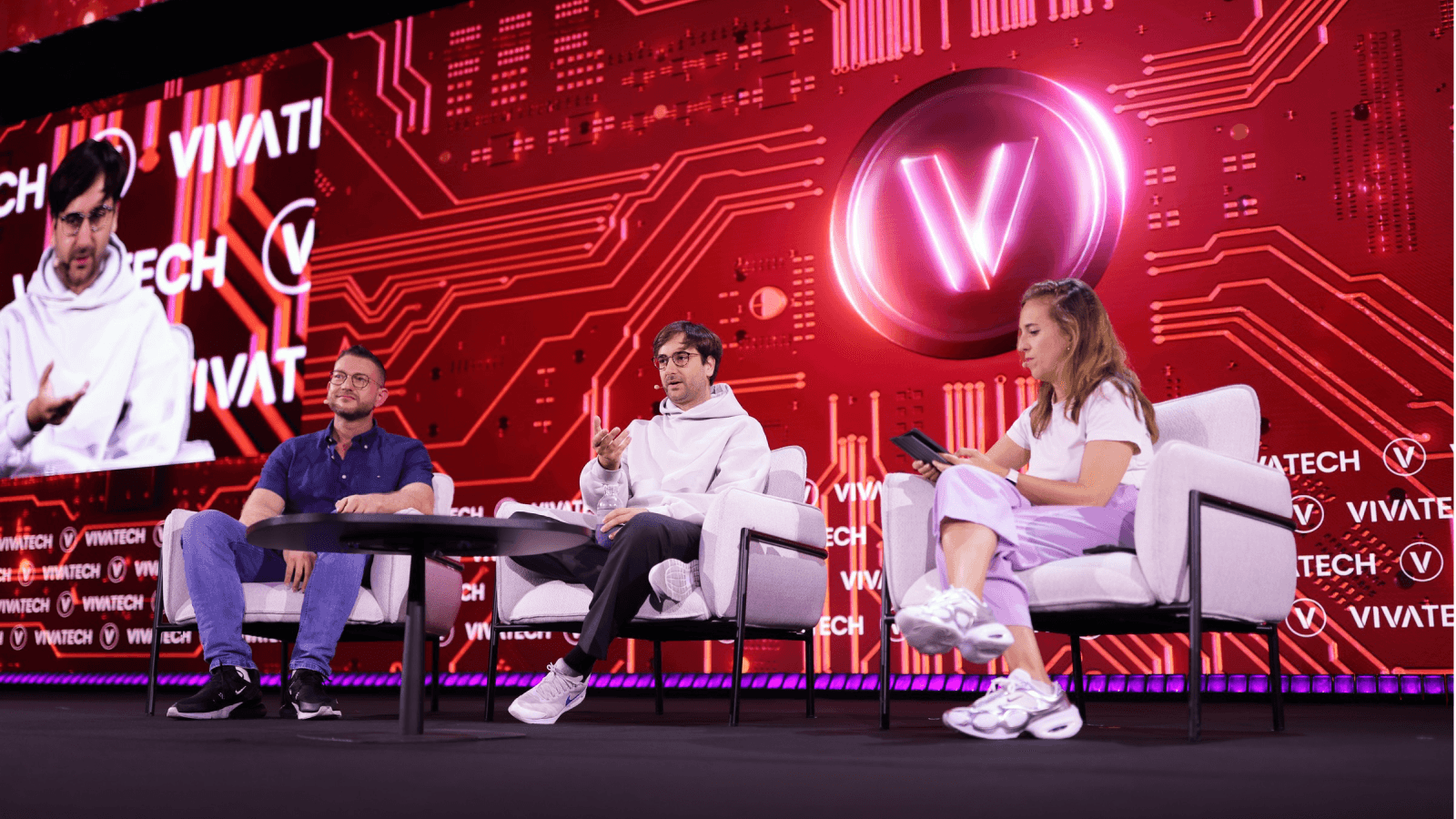
"The gap between what we do with those models and what they are able to do has never been higher. So the main issue we have right now is imagination." Thibault Sottiaux, Creator, OpenClaw and Member of Technical Staff, OpenAI
In the VivaTech Theater, OpenAI head of core product Thibault Sottiaux and OpenClaw founder Peter Steinberger, who joined OpenAI in February, traced how the conversation moved in a single year from generative AI to agentic AI.
Sottiaux explained the shift in plain terms. Models learned to handle far more context, use tools efficiently, and run for longer, and a lighter harness let the model take actions in its own world. Steinberger described the next rung, where people stop talking to a single agent and instead talk to a model that delegates work to other agents, so AI talks to AI.
The most striking claim was about adoption. Sottiaux said Codex usage in France grew ninefold this year, with the fastest growth coming from everyday business work rather than developers, from triaging email to running a fundraise.
Both speakers argued the real bottleneck is imagination, since the gap between what people ask of these models and what they can already do has never been wider. They expected specialized agents to persist for now, with security and education as the limiting factors. Sottiaux closed on the company mission to put a personal AGI (Artificial General Intelligence) in everyone's pocket, and noted adoption has grown faster in Europe than in the United States.
If you liked this session, don't miss: The Human Infrastructure of AI - Stage One, June 19, 11:15, with Adecco, Bel, and Publicis Groupe.
Look East: China's AI Ascent and the Full Stack Advantage
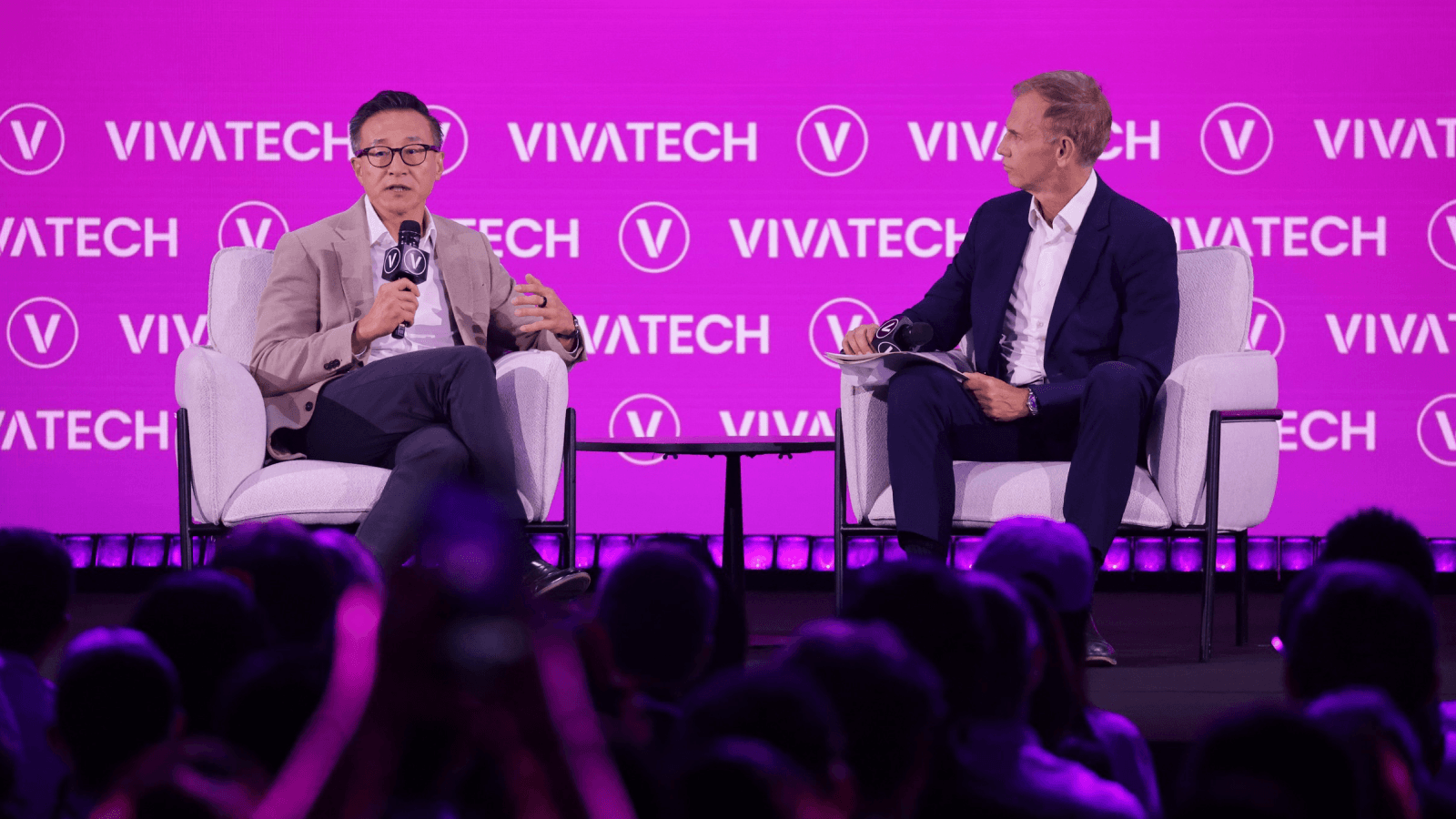
"When you're chatting with a chatbot, all of your most private questions and your confessions go into some pool where they use that to further train their model. You have no idea where that's going." - Joe Tsai, Chairman and Co-founder, Alibaba
In the VivaTech Theater, Alibaba chairman and co-founder Joe Tsai joined Christophe Jakubyszyn of Les Echos, introduced by Maurice Lévy, for the half of the AI map that Paris tends to forget.
Tsai retraced Alibaba from a 1999 business-to-business marketplace to Taobao, which serves 820 million Chinese consumers, and to a cloud and AI business funded by 25 billion dollars of annual e-commerce cash flow.
His framing of the opportunity was deliberately large. AI produces units of human intelligence and productivity, so its total addressable market is at least half of global GDP, roughly 50 trillion dollars, far above any software budget.
Tsai made the case for the full stack, since no one yet knows whether value will accrue in chips, cloud, or models, so Alibaba plays across all of them.
The sharpest stretch was on sovereignty, where he tied open source directly to the kill switch fear that European leaders raised with him for weeks, pointing to the recent restriction of a closed American model.
His argument was that Qwen, the most widely used open-weight model in the world, lets a company download the weights, fine-tune on private data, and keep everything inside its own firewalls. He conceded Europe cannot fully trust any foreign government, then offered diversification as the practical hedge.
If you liked this session, don't miss: The Future of Finance - VivaTech Theater, June 19, 09:30, with Sarah Youngwood and Karen Tso.
Special Address: Narendra Modi
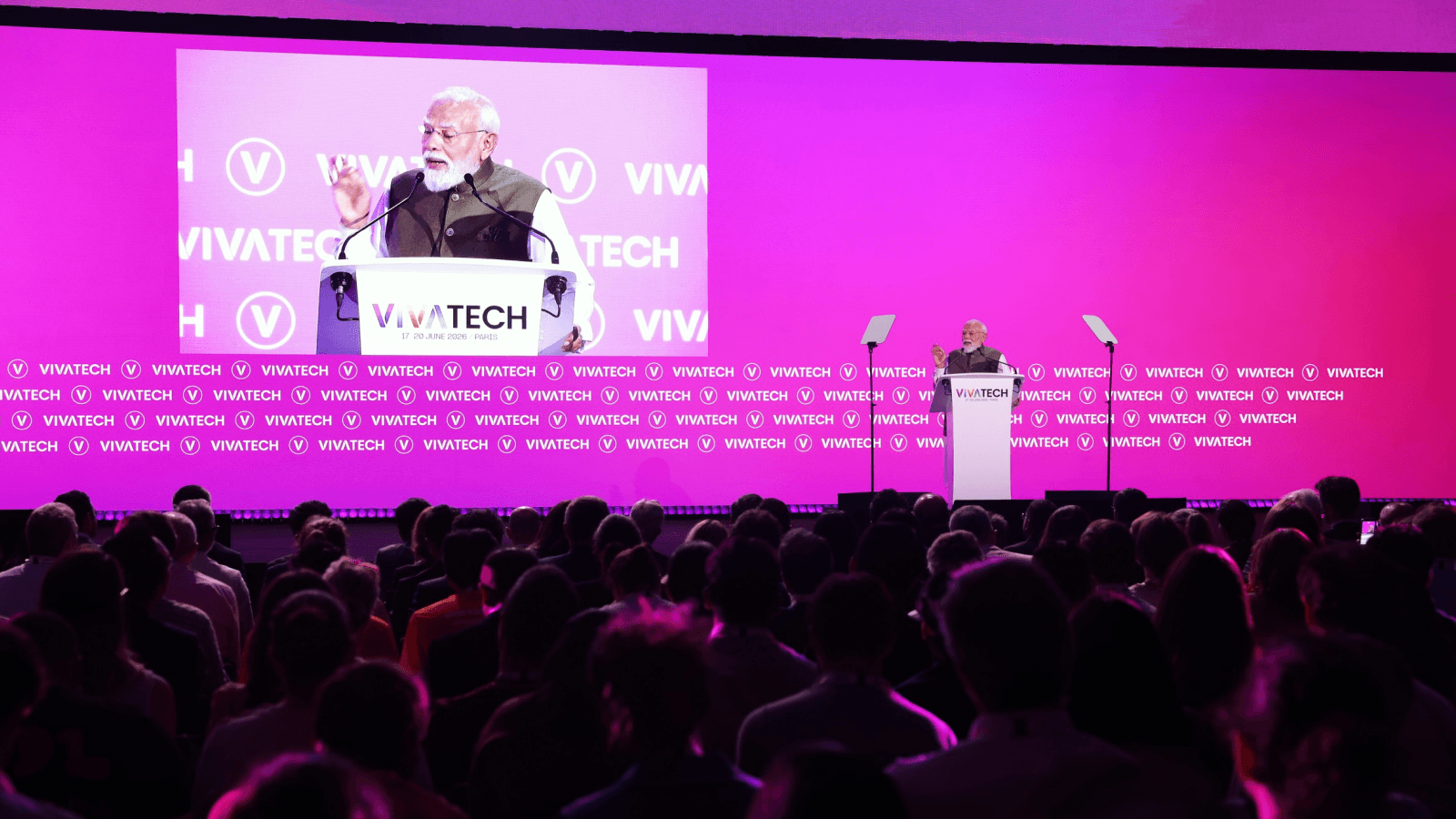
“Technology can lead to progress only when it is democratized. India believes that in this era of disruption, technology must deliver for all. AI must improve lives, widen access, drive growth and also help us sustain a healthy deep planet.” - Narendra Modi, Indian Prime Minister
In the VivaTech Theater, Prime Minister Narendra Modi delivered the special address of Day 2, arriving days after opening a new chapter of the France-India relationship in Nice alongside President Macron.
India returns to VivaTech's tenth edition as its first ever AI country partner, under the theme tech for humanity.
Modi anchored his case in scale. India runs the world's largest digital public infrastructure, and because of its Unified Payments Interface (UPI), half of the world's real-time digital transactions now happen there, usable in France at the Eiffel Tower and Paris airports.
He walked through a stack of digital public goods, from DigiLocker, which gives 700 million users authentic documents on demand, to the GatiShakti planning platform that compressed infrastructure surveys from months into weeks.
He grounded the social return in concrete cases, an AI assistant advising millions of women dairy farmers in their own language, women trained as drone pilots, and satellite data guiding fishermen to the best zones.
Modi placed access at the center of the argument, repeating that AI for India means all inclusive. He closed on the investment climate, citing over 200,000 startups, targeted incentives above 50 billion dollars, and affordable data and green energy, with a direct call to the room. Work with India and deliver for all.
If you liked this session, don't miss: What AI Can't Build - VivaTech Theater, June 19, 2:05, with Alexis Ohanian and Roxanne Varza
Open vs Closed: Who Gets to Build AI?
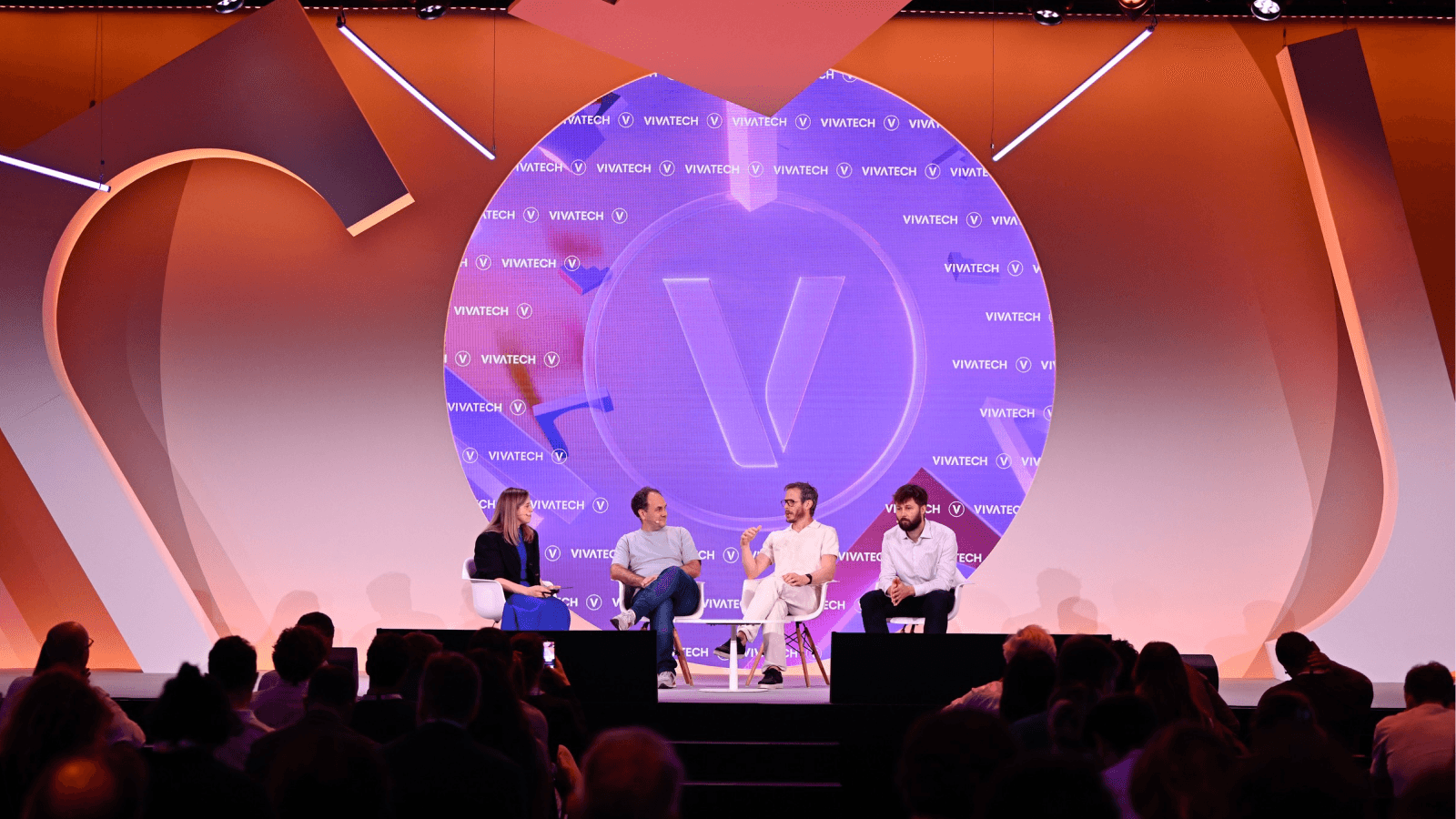
"It's maybe a bit strong, but very bad for humanity, I think, to have just one or two corporations that basically own the whole intelligence layer." - Thomas Wolf, Co-founder & Chief Scientist Officer, Hugging Face
On Stage One, Hugging Face co-founder and chief science officer Thomas Wolf, Nebius chief technology officer Danila Shtan, and JetBrains head of technology Vladislav Tankov met with Bloomberg's Amy Thomson in the immediate aftermath of a market shock.
The previous Friday, access to a leading closed model had been abruptly restricted, reportedly along nationality lines, and all three panelists read the episode the same way. Closed-model concentration is now an active business risk, and open-weight models are the rational hedge.
Wolf told the story of a biotech chief executive locked out of the model his pipeline depended on, who switched to an open-weight model and fine-tuned it on his own data overnight.
Shtan pushed the argument one layer deeper, calling the model a building block rather than the product, since his clients running agents in production fine-tune to a new use case every other week.
Tankov brought the developer view, where reproducibility and control now outweigh raw frontier capability for anything in production, because you cannot bet a system on a model that can vanish on a nationality decision.
On sovereignty, Shtan warned that Europe keeps building roads while ignoring whether enough cars will drive them. Their advice to founders was unanimous. Build the product first, and treat the model as a swappable part.
If you liked this session, don't miss: Keeping Humans in Control: Trust, Security & Ownership in the AI Era - VivaTech Theater, June 19, 09:00, with Ledger and Maurice Lévy.
The Next Act of Netflix
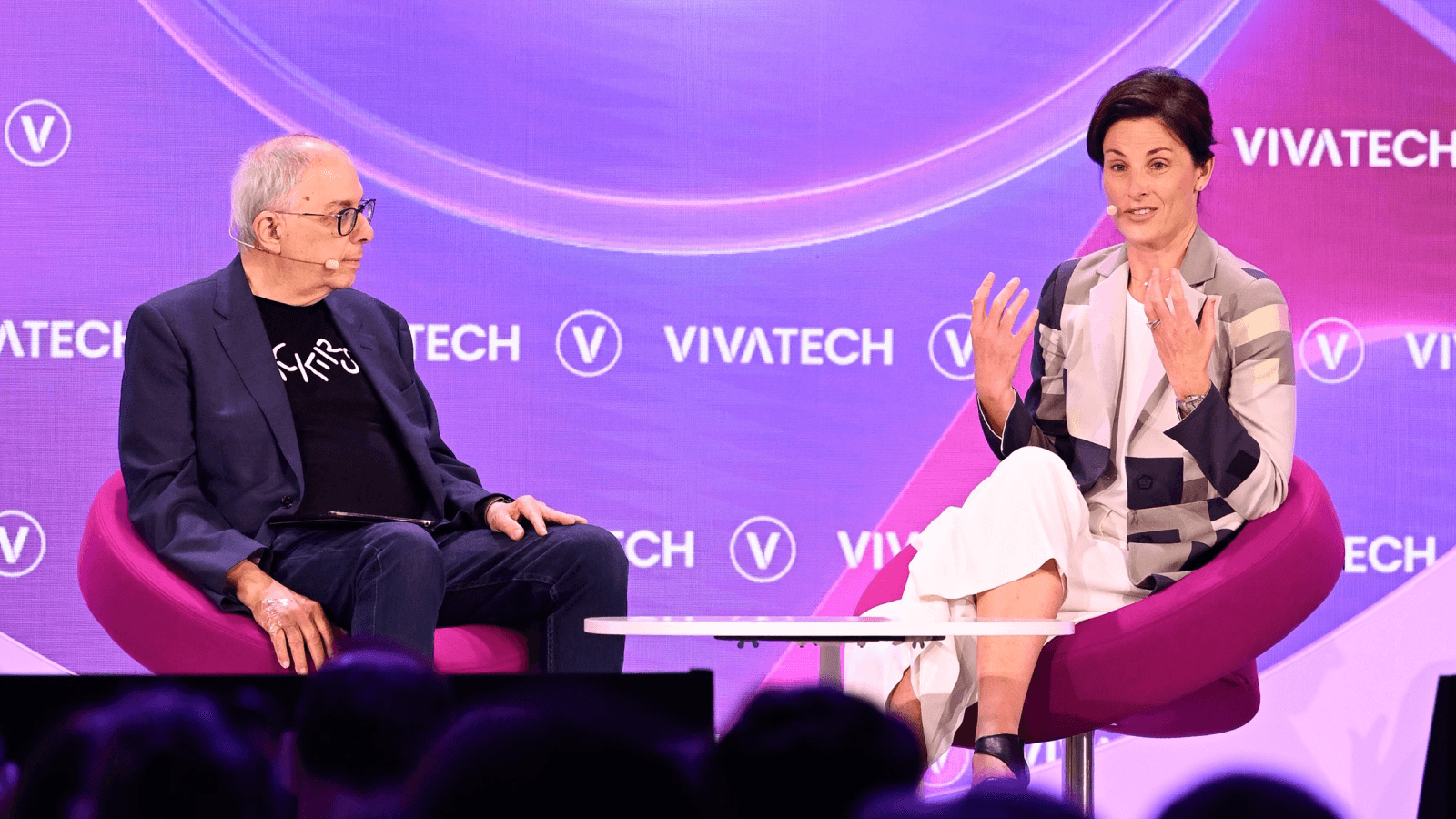
"Entertainment is no longer one thing. It's beyond film and series. It's games. It's live content. It's creator-driven content." - Elizabeth Stone, Chief Product and Technology Officer, Netflix
On Stage One, Netflix chief product and technology officer Elizabeth Stone joined Wired editor-in-chief Steven Levy, who opened with history.
Sixteen years ago a Time Warner chief mocked Netflix as the Albanian army trying to take over Hollywood, and Time Warner is now gone while Netflix programs for almost a billion people. Stone framed the current chapter as the end of single-format entertainment, with film, series, live sports, games, and podcasts folded into one subscription on the argument that consumers stopped treating entertainment as one product.
The friction made the session. Levy called NFL rights the most expensive content possible and questioned the goodwill they earn, and Stone answered that global reach gives partners like the NFL an international audience a domestic broadcaster cannot match, including an exhibition game in Australia.
On data, she drew a clear line. Netflix personalizes using only on-platform behavior, what a member watched, finished, and rated, never outside sources, while generative AI marks a step change on top of decades of machine learning.
On creative red lines, Stone kept Netflix on the tooling side, supporting filmmakers who reject AI and those who want to experiment. Levy closed on a bill that climbed from twelve to twenty-two dollars, and Stone defended the value, pointing to the 8.99 euro ad-supported plan in France.
If you liked this session, don't miss: Competing for Attention: The New Rules of Media Investment - Stage One, June 19, 10:15, with Joy Robins.
Ecosystem as Infrastructure: How Integrated AI Partnerships Deliver Sovereignty at Scale
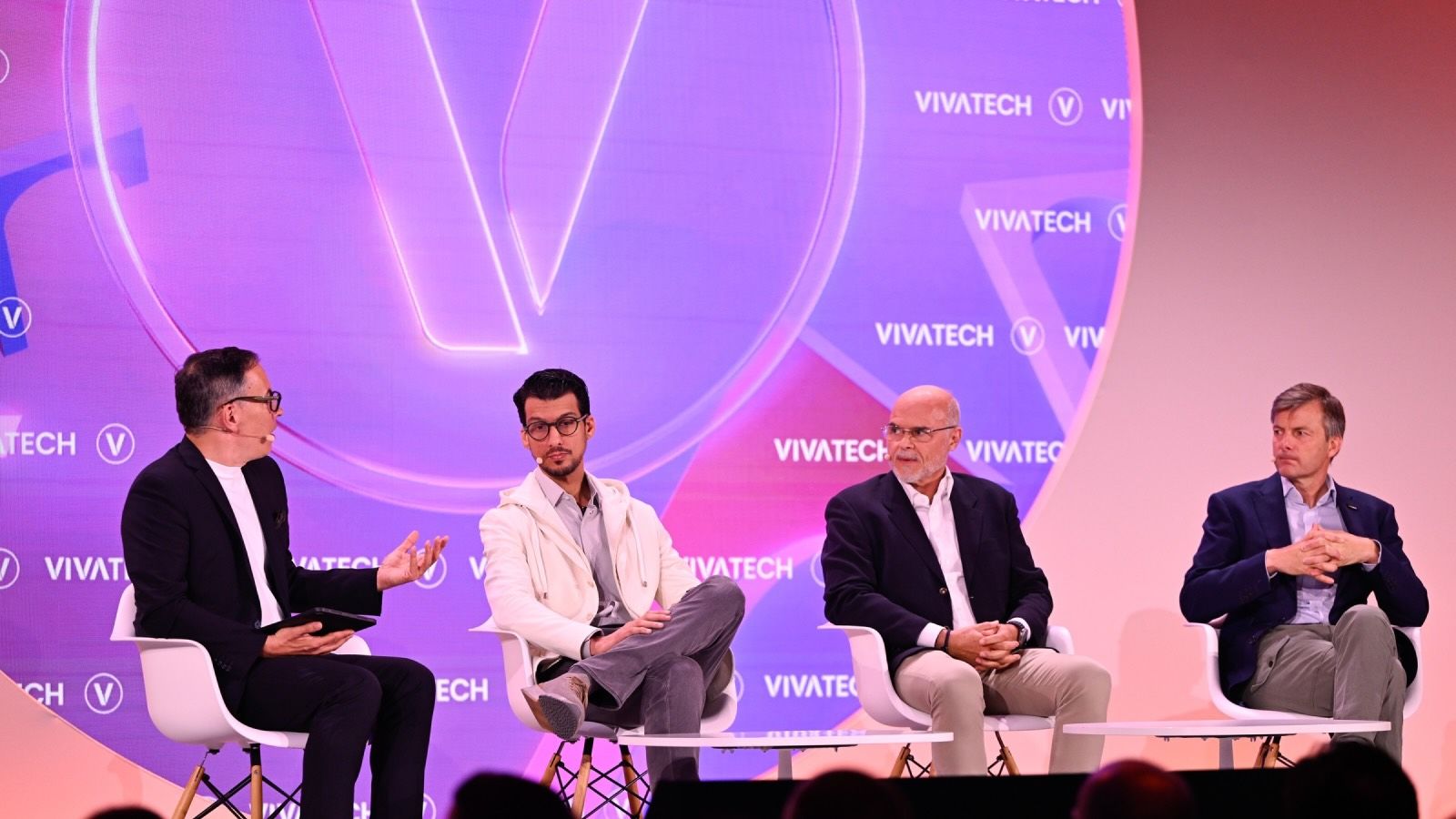
"Every three to five days, there is either a new regulation or an update on a regulation somewhere in the world. If you're not compliant, you don't have the license to operate in a country." Philippe Limantour - CTO & CSO, Microsoft France
On Stage One, Olivier Oullier, Talal Al Kaissi, Nat Ives, and Philippe Limantour unpacked the same fault line that ran through the day: whether Europe can hold strategic control over AI without cutting itself off from the global infrastructure that makes AI possible.
Oullier opened with a concrete provocation. Access to Fable 5 and Mythos was cut last week following a White House order, and he held it up as a wake-up call for a continent of tenants. The Prime Minister's 655 million euro sovereignty package, he noted, lands against an average cost of around 50 billion dollars per gigawatt of AI capacity.
Al Kaissi reframed the question. Sovereignty in his telling is not isolation but a combination of jurisdiction, governance, compliance, and auditability, a hybrid where public-sector workloads run on encrypted public cloud and the most sensitive data sits in air-gapped environments. He then turned energy into an export argument: with NVIDIA's GB300 pulling 140 kilowatts per rack and Jevons paradox guaranteeing that supply only creates demand, the UAE's five gigawatt AI campus lets a hydrocarbon exporter pivot to exporting intelligence in tokens, reaching half the world's population within 60 milliseconds.
Ives and Limantour handled the harder contradictions. Ives used Jensen Huang's five-layer stack, from electricity to applications, to argue that no company or country builds the whole thing alone, and that France has navigated global supply chains for centuries through Airbus, Michelin, and nuclear power. Limantour acknowledged that Microsoft keeps servers and compute in Europe yet still answers to US law, then pointed to a new EU eEvidence regime that mirrors the Cloud Act and cuts both ways.
The close was practical and direct. Limantour named cybersecurity as the risk far ahead of all others. Ives argued the real constraint is cultural rather than technical, pointing to 60 percent of French people now using AI regularly. Al Kaissi ended on G42's digital embassies, government-to-government arrangements designed to give legal air cover against the Cloud Act, with France and India among the first to explore them.
If you liked this session, don't miss: Sovereign Tech in a Fragmented World - Purple Stage, June 19, 2:50 PM
Roll Out The Red Carpet

VivaTech and Bloomberg joined forces to create the most prestigious awards ceremony in the tech industry. VivaTech x Bloomberg Awards recognize the most impactful personalities shaping the future of technology. And the winners are….
- Visionary Award winner: Sir Tim Berners-Lee - Inventor of the World Wide Web, Co-Founder & CTO, Inrupt
- Leadership Award winner: Joe Tsai - Co-Founder & Chairman, Alibaba Group
- Momentum Award winner: Yann LeCun - Executive Chairman, AMI Labs
- Breakthrough Award winner: Peter Steinberger - Creator, OpenClaw and Member of Technical Staff, OpenAI
- Investor Award winner: Jeannette zu Fürstenberg - President & Managing Director, General Catalyst
- Rising Star Award winner: May Habib - Co-Founder & CEO, WRITER
- CitizenTech Award winner: Ukraine
Stage Panorama
Black Stage
Information integrity opened the Black Stage, from synthetic influencers built on a credit card and a prompt to the moment real footage starts getting dismissed as fake.
- Key session, Who Shapes What We Know? Algorithms, Echo Chambers, and the Fragmentation of Truth, from AI influencers to ambient uncertainty, with Emmanuelle Saliba (GetReal Security), Mahsa Alimardani (Witness), and Philipp Dewald (deepfake detection).
Health tech carried the Black Stage in the afternoon from the algorithm into the body, from a brain micro-robot to AI that triages mental health to care delivered on a basic phone in rural Kenya.
- Key session, Democratizing Mental Healthcare: Can Algorithms Scale Empathy?, from empathy in the eye of the beholder to triage at the scale of millions, with Karin Stefan (Earkick), Nina Vasan (Stanford Brainstorm), Brandon Bensley (Salma Health), and Fana Correra (Sword Health).
Red Stage
The Red Stage spent the morning on one uncomfortable question, everyone is buying AI so why is the return so hard to find, and kept landing on the same answer, the bottleneck is human.
- Key session, AI in the Office: Are We Really More Productive?, from output to outcomes, with Susan Emerson (Salesforce), Matthieu Caillat (AXA), Emma Auscher (Notion), and Steve Chase (KPMG). Caillat put a number on it, 70% of AI value comes from people and 30% from the algorithm.
GreenTech, Energy & Mobility. The Red Stage closed on climate, reframing adaptation as scaling what already works rather than chasing new inventions.
- Key session, Future-Proof: Designing Cities That Withstand Climate Change, from net-zero retrofits to passive-cooling bus shelters, with Hélène Chartier (C40 Cities), Marie-Luce Godinot (Bouygues), and Lénaïg Pineau (JCDecaux).
Purple Stage
The Purple Stage spent the morning working through the layers most people never see, from quantum processors and photonic chips to humanoid robot brains and the AI quietly dismantling the language barrier.
- Key session, Speak the World: AI and the End of the Language Barrier, from a viral translation tool to a company that owns its full model stack and is moving into real-time voice, with Jarek Kutylowski, founder of DeepL.
The stage closed on the security clock, the machine that breaks today's encryption does not exist yet, but store now and decrypt later makes the quantum-safe transition urgent already.
- Key session, The Quantum Countdown: Is Your Encryption Already Obsolete?, from Shor's algorithm to a practical post-quantum playbook, with Anne-Sophie Carrese (Elaia Partners), Fanny Bouton (OVHcloud), and Eleni Diamanti (CNRS, Sorbonne)
The Fun Continues Tomorrow!
There’s still so much to come at VivaTech, so don’t miss a moment! Follow the latest announcements and highlights on Instagram, TikTok, and LinkedIn. And if you’re sharing your own experience, tag @VivaTech and use #VivaTech so we can follow along with your journey at Europe’s biggest startup and tech event.