Key takeaways |
|---|
|
International Equal Pay Day is celebrated by the United Nations each year on September 18th. This aligns with Sustainable Development Goal 5, gender equality. Across the world women are paid less than men, with women employees earning approximately 78 cents for every dollar a man makes. Women often take on unpaid roles in their homes, spending 2.5 times as many hours as men in unpaid care work.
STEM (Science, Technology, Engineering, and Math) fields have historically been dominated by men and despite a sustained effort to increase female interest in these sectors, the gap remains large. According to research by PWC only 3% of women say a career in technology is their first choice, and only 5% of leadership positions in tech are held by women.
The Cyclical Problem
At all stages in business creation women are notably under-represented, this compounds and creates a cycle of female founded ventures being overlooked and struggling to survive.
There Are Not Enough Female Founders
Only 15% of startups globally are founded by an all women team, with the number rising to 31% for companies with at least one female founder. However, this number varies drastically by region and country, with MENA only having 10% female founders.
A report from the Roland Berger Foundation for European Management focusing on the French and German tech ecosystems found in France only 3% of startups were founded by solo women or only female teams, and co-ed founding teams were 12.3%—leaving nearly 85% of French startups founded by men.
There are a multitude of reasons that could contribute to this, from the lack of women in c-suite positions that have the expertise to spin off to become founders to a lack of representative role models to look up to. No matter the cause, the outcome is the same: fewer female founders.
But how does this create a gender pay gap? The real money in startups comes from the exits and the people getting the payouts are those with equity in the company, typically the founder(s). The fewer female founders the fewer women getting the big check at the end.
Women-Led Startups Are Valued Lower
The issues don’t stop after a woman succeeds in founding her business. Now she faces the second step in the cycle keeping female founders from pay equality: women-led startups lack funding and are valued lower than their male counterparts.
Part of this can be traced back to the majority of investors being male. Nearly 85% of VC partners are male and only 5.7% of VC firms were founded by women. Research has shown that female investors are much more likely to invest in women-led projects than their male counterparts, with firms with female partners investing on average 2.3x more than their all-male peers.
This problem persists throughout the startup funding rounds, research from INSEAD show that when female founded companies receive their first funding round from women led investment firms they are two times less likely to receive a second round of funding than those backed by male investors, with their work discredited with the thinking, however erroneously, that the funding was simply a case “of women helping women”.
Part of this gender disparity can be tied to the lines of questioning male and female founders are subjected to. Male founders are often asked about how their company will succeed, while female founders are asked how they will not fail. This promotional vs preventive stye of question, greatly negatively effects female founders, researchers said "Every additional prevention-focused question significantly hinders the entrepreneur’s ability to raise capital, fully mediating gender’s effect on funding.” But hope is not lost, that same study showed that entrepreneurs can mitigate the effects of those questions by answering with promotion-focused answers.
Female CEOs Maintain Less Founders Equity
For the women that become founders, secure funding, and have their companies fairly valued, they face one final obstacle in their way to equal payment: equity. Female founders tend to have much lower levels of equity in their companies at the time of exits when compared to male counterparts. Research done by Carta found that women make up 13% of founders, but hold 6% of founder equity and own just 39 cents for every dollar of equity male founders own.
This gap varies by sector and region, with the life sciences being especially divided, Forbes reported male founders maintained up to 81% while women were capped out at 30%. A study done on Japanese startups found that in companies with mixed gender founders the male founder tends to maintain a higher equity percentage.
This lower exit pay out for women feeds back into the cycle, giving them less money to fund a new venture and turn them into serial entrepreneurs, or create programs to support women coming into the space.
Things Aren’t All Bleak
While this topic can be disheartening, it's not all bad news. Female entrepreneurs are growing and more programs are popping up dedicated to supporting women on the journey.
Growing Representation
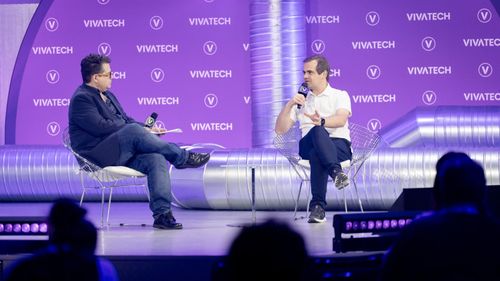
Representation and female role models can make a big difference to women considering founding a startup. In an interview with Joana Cartocini, co-founder of Robeauté, she said, “I think representation means everything. We can only dream what we see. So the more women we see out there, taking risks, failing, surviving, continuing to build, not being deterred by naysayers or anything else, but being focused on their mission, staying in their truth. I think the more women allow themselves to dream that.”
An interview with Paula Mendez, founder of Oly, echoed the sentiment “I think it's just seeing other women, trying things, and starting at things. I think it can really motivate other women. So it's a ripple effect. It's more visibility, for sure.” Check out a few female founders that have seen success after VivaTech.
Institutional Support
A second pillar pushing women forward is institutional support, from female lead VC firms, government backed programs, tech giants, and NGOs. Programs like Women Tech EU and Women Entrepreneurship Strategy are providing government backed equity free investments to women founders. Tech giants also provide programs to assist female founders such as Google’s Female Founders Fund. More female run VC firms, concentrated on investing in women’s entrepreneurs are becoming established like BBG Ventures, Rethink Impact, and Fund F.
These support systems often give access to support and mentorship in addition to funding, which can help women better navigate the startup scene and avoid the many traps of the system.
Awards and Honors
Another avenue to support women entrepreneurs are awards and honors, these competitions often give access to funding, mentorship, and increased media attention. At VivaTech we have been celebrating women-led startups since 2019, with our Female Founder Award. Past winners have gone on to close multi-million dollar funding rounds and receive access to mentorship from top leaders in their fields. The winner of the Female Founder Award gets a free booth at VivaTech, one-to-one meetings with VCs, strong visibility and media attention, fundraising coaching, and a 5 month business development mentoring program.
Founders can also apply to the Women’s Startup Awards, Aurora Tech Award, and the Margaret Awards by JDF to name a few. These can make a huge difference for women just starting out or trying to scale up.
Looking Forward
Today we take the time to celebrate the advances toward equal pay that have been made and remind ourselves why it is so important to continue to push for equality in the systems we participate in today.
| FAQs | |
|---|---|
| How big is the funding gap for women‑led startups? | Women‑only founding teams typically receive a small single‑digit percentage of total VC funding, while mixed teams receive more but still less than male‑only teams, highlighting a persistent imbalance in capital allocation. |
| Why do women founders receive less venture capital? | Key factors include network access, investor pattern recognition bias, lack of diversity among decision‑makers, and differences in how ideas are perceived as “venture‑scale.” |
| Is this just a diversity issue or a business issue? | It’s both. Beyond fairness, investors may be missing high‑potential opportunities, meaning the gap represents a potential loss of returns and innovation. |
| What can VCs do to close the gap? | They can diversify decision‑making teams, expand sourcing networks, track funding data more transparently, and rethink how they evaluate founders and markets. |