Climate change is already reshaping how we operate
Heatwaves, droughts, and floods are no longer projections for the future. Climate change is already transforming our lives, businesses, supply chains, and economic models. According to a recent study, nearly nine out of 10 companies have experienced supply chain disruptions linked to climate change.
As these risks become more frequent and complex, technology offers new ways to anticipate, measure, prevent, and adapt to disruption. But how far can technology really help us build resilience?
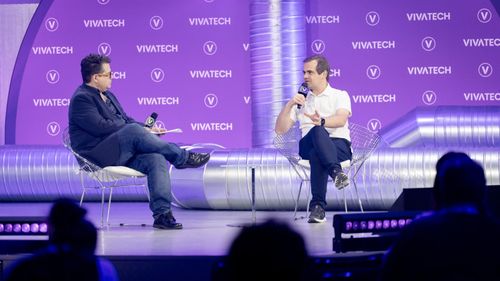
This question was at the heart of a recent Viva+ session, which brought together around 40 organizations and three complementary perspectives from business, humanitarian operations, and digital infrastructure.
Rym Abraoui, Climate Adaptation Lead for Operations at Médecins Sans Frontières, Jean-Benoît Besset, Executive Vice President for Environment and Energy Transition at Orange, and Frédéric Trinel, co-CEO of EcoVadis, explored how organizations can prepare for climate-related disruption.
Their shared conclusion was clear: technology can help us anticipate crises, but resilience depends on how we use it, who can access it, and whether we prepare collectively. Adaptation is essential, but it must not replace mitigation.
From reaction to anticipation
Climate adaptation involves more than responding to extreme weather events after they happen. It means identifying risks early, preparing operations and communities, and building the capacity to respond when circumstances change.
For businesses, this can involve adapting supply chains, protecting infrastructure, assessing exposure to climate risks, and integrating resilience into long-term decision-making. For humanitarian organizations, it can mean ensuring that teams can continue operating in difficult and unpredictable conditions.
For Rym Abraoui, technology is central to this shift from reaction to anticipation:
Technology is extremely important for helping us anticipate and better prepare our responses in the different countries where we work, so that we can better support the populations we assist.
Médecins Sans Frontières uses geographic information systems, satellite data, and early-warning systems to identify vulnerable populations, assess which areas may remain accessible, and decide where to position medical supplies and other resources.
The organization also prepares emergency plans based on different scenarios. In the event of flooding, this may involve distributing hygiene kits and food, launching a water and sanitation program, or preparing a medical facility. These plans require investment in advance, including prepositioned equipment and trained teams.
However, the most effective solution is not always the most technologically advanced one. In Sudan, for example, an emergency plan at a hospital surrounded by waterways is triggered by a simple graduated scale. Someone checks the water level each day and activates the plan when it reaches a certain point.
This example shows why technology must be adapted to local conditions. In some humanitarian settings, electricity is not guaranteed and teams may depend on generators.
As humanitarians, we may not have access to electricity everywhere. We may have to rely on generators. It is therefore important to consider all the different challenges we face every day when developing the technology we are going to use.
Technology can support adaptation, but it must be accessible, reliable, and designed around the people and environments it is intended to serve.
Making supply chain risks visible
For Frédéric Trinel, a company’s resilience often depends on the weakest link in its supply chain. That weak link may be far beyond the company’s direct suppliers, at the level of a supplier’s supplier or even further upstream.
EcoVadis helps companies identify these risks by providing reliable and comparable sustainability data. This enables organizations to make better decisions, support improvement across their supply chains, and prepare alternatives before a disruption occurs.
Data becomes even more powerful when it is shared. EcoVadis was created in response to a practical problem: suppliers were being asked to complete similar sustainability questionnaires for each of their customers. A shared platform allows a company to be assessed once and share the results with multiple customers.
This approach shows how collaboration and technology can help companies move from reactive crisis management to long-term preparation.
It also strengthens the business case for action. Companies that diversify their suppliers, prepare alternative transport options, reduce energy dependence, and improve resource efficiency can protect continuity while supporting decarbonization.
Scaling climate risk assessments
Climate-related risks are not new to telecom operators. Orange has always had to respond quickly to storms and other disruptions to maintain network continuity. What is changing is the frequency and intensity of these events, as well as the need to understand how infrastructure will respond to future conditions.
Orange is developing risk mapping and adaptation strategies based on the most severe plausible scenarios, with a planning horizon extending from 2030 to 2050. These scenarios include risks such as power outages and extreme heat.
The challenge is scale. A detailed vulnerability assessment covering around 10 sites in countries including Romania, Belgium, Tunisia, and Côte d’Ivoire took four months. Orange operates tens of thousands of sites, so technology and AI will be needed to assess risks more efficiently.
However, AI can only improve resilience if it is based on accurate and relevant data. Assessing a site’s heat exposure may require information about the number and orientation of windows, or the circulation of air inside a building. Adaptation also needs to be considered at territorial level. Protecting one site will have limited value if the surrounding transport network, energy system, or local community remains exposed.
The business case for resilience
Resilience is not only a question of risk management. It can also create business value. For Frédéric Trinel, investment in sustainability and decarbonization is both an environmental responsibility and a financial opportunity:
There is clearly a positive business case for doing the right thing on sustainability and, of course, on decarbonization.
Reducing dependence on fossil energy can lower exposure to price volatility, improve efficiency, and prepare companies for changing regulations and market expectations. “Companies that move toward green energy are benefiting today. Again, there is a business case.” According to a recent Capgemini study 73% of executives see value creation as a major factor in sustainable investment, while 69% of companies reported a positive return on investment from sustainability initiatives.
Recent disruptions have made the cost of inaction more visible. When river transport in Germany was interrupted, companies that had prepared alternative transport options were better able to continue operating.
The business case for resilience is therefore not limited to corporate responsibility. It is also about protecting continuity, reducing risk, and creating the conditions for long-term performance.
Connecting startups to real-world challenges
Large organizations can also support climate resilience by helping startups respond to real customer needs. Through its broad customer base and presence across multiple geographies and sectors, Orange sees a wide range of operational challenges. It can help startups refine solutions, share problems faced by its customers, and support development through Orange Digital Ventures.
This type of collaboration can help bridge the gap between innovation and implementation. Startups bring focus, agility, and new ideas, while established organizations can provide access to customers, expertise, infrastructure, and investment.
From discussion to action
The session showed the value of bringing businesses, startups, public institutions, NGOs, and communities into the same conversation. Climate change affects each of them differently, and solutions that work in one context may not work in another.
Julia Soares Rehder from Daphni, who attended the session, highlighted the value of this diversity:
The diversity of speakers and seeing different angles on the topic was very interesting. Hearing from an NGO, as well as from more corporate and expert perspectives, showed how the same issue can affect different people in very different ways.
Technology can support anticipation, improve decision-making, and enable new forms of collaboration. However, it is not a standalone solution. Its impact depends on the quality of the data behind it, the context in which it is deployed, and whether it responds to real needs.
Building a more resilient future will require long-term investment and collective preparation. It will also require us to connect adaptation with mitigation. As the speakers emphasized, it will always be easier to adapt to a limited increase in global temperatures than to a rise of 5°C.
Join the conversation at VivaTech
As climate risks continue to reshape our economies and societies, the conversation around adaptation has never been more important.
Join us at VivaTech to discover the technologies, partnerships, and ideas helping organizations anticipate disruption, strengthen resilience, and build a more sustainable future.