In today's creator economy, audience size is no longer the only measure of success. As platforms evolve and algorithms change, creators are increasingly focused on something more valuable: ownership.
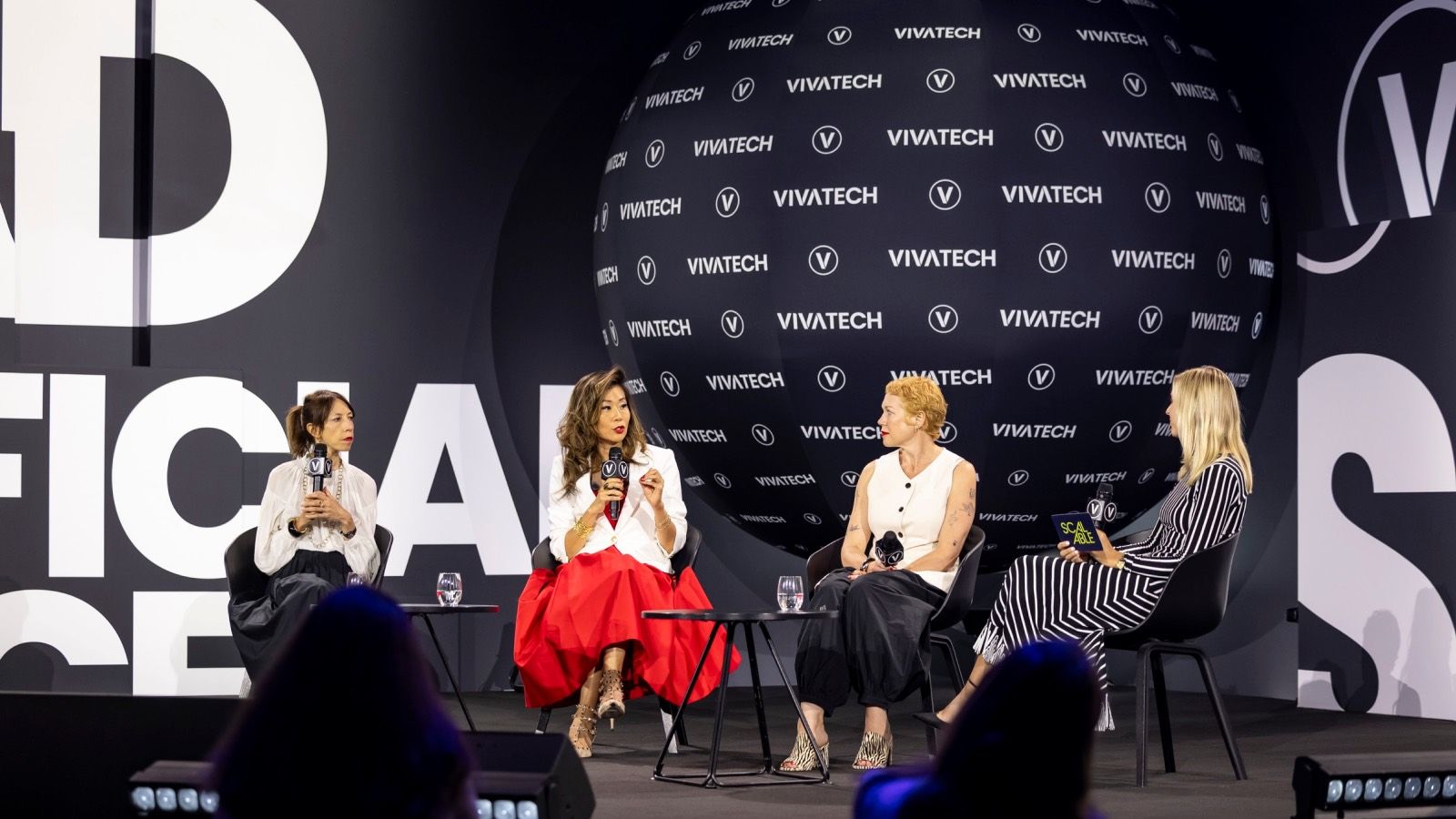
That was the central theme of the VivaTech 2026 session Who Owns the Audience? Platform Power vs. Creator Independence. Moderator Kaya Yurieff was joined by Tyler Chou, Founder of Tyler Chou Law for Creators, Jo Burford, Strategic Advisor at Edelman, and Renée Kaplan, Head of Substack France, to explore how creators can build businesses that are not dependent on a single platform.
Beyond Followers: Building a Business That Lasts
For years, success in the creator economy was largely measured by reach. More followers meant more visibility, more brand partnerships, and more opportunities.
According to Tyler Chou, that equation is changing.
"The buyers don't want you to just be a tenant on YouTube."
Subscriber counts still matter, but investors increasingly want to see something that exists beyond the platform itself. An email list. A newsletter. A community. A product. A business that creators own, rather than borrow from an algorithm.
That shift is also changing how creators approach intellectual property.
Chou pointed to two recent films directed by YouTubers that outperformed Star Wars at the box office, including one produced for just $750,000 that has since grossed more than 00 million worldwide. Rather than handing over their ideas to traditional studios, creators are increasingly choosing to retain ownership of the underlying IP and build businesses around it.
The same thinking is spreading beyond entertainment. Chou cited the example of a finance creator whose budgeting app helped increase the company's valuation from 5 million to 00 million in less than two years.
The common thread was clear. Content may attract an audience, but ownership is what creates long-term value.
Why Platform Independence Matters
Jo Burford did not need to imagine what platform dependence looks like. She had already lived through it.
While working at Twitter during the acquisition of Vine, she watched one of the internet's fastest-growing creator platforms disappear almost overnight. When Vine shut down in 2015, roughly 70% of the creators she worked with lost their careers.
The story has become one of the defining examples of why creators are looking beyond a single platform today.
A social platform can provide extraordinary reach, but it does not guarantee stability. Algorithms change. Business models evolve. Entire platforms can disappear.
Burford argued that a smaller, highly engaged community is often more valuable than hundreds of thousands of passive followers. The strongest creator businesses are built on audiences that are willing to subscribe, purchase products, attend events, or follow a creator wherever they choose to publish next.
From Followers to Community
Renée Kaplan sees that shift every day through Substack.
"You own the audience and the value of the audience," she said.
She explained that publishers increasingly look for writers with paying subscribers rather than simply large social media followings. Subscribers represent something different. They demonstrate trust, engagement, and a willingness to invest directly in a creator's work.
Kaplan also challenged the assumption that creators need massive audiences before launching a subscription business. Around 100 paying subscribers, she explained, can often be enough to begin building momentum.
Throughout the conversation, ownership was described not as abandoning platforms, but as reducing dependence on them. Social media remains a powerful way to reach new audiences. The goal is to create relationships that continue beyond any single app or algorithm.
Authenticity in the Age of AI
The final part of the discussion turned to artificial intelligence and what it means for creators.
Rather than seeing AI as a replacement for human creativity, the panel suggested it may increase the value of authentic voices. As generative AI makes it easier to produce content at scale, originality and trust become harder to replicate.
Tyler Chou summed it up simply.
"As long as there are humans," she said, "we want stories. We want connection."
It was a fitting conclusion to a session that was ultimately less about technology than about relationships.
The tools creators use will continue to evolve. Platforms will rise and fall. AI will change how content is produced.
But the discussion at VivaTech 2026 suggested that the creators best positioned for long-term success will be those who own more than their content. They will own their community, their intellectual property, and the direct relationships that turn an audience into a business.
Watch the replay of Who Owns the Audience? Platform Power vs. Creator Independence to explore the full discussion.
Want to discover the ideas shaping the future of technology? Join us at VivaTech 2027 and be part of the conversations driving innovation across industries.


