How AI Is Changing Democratic Systems
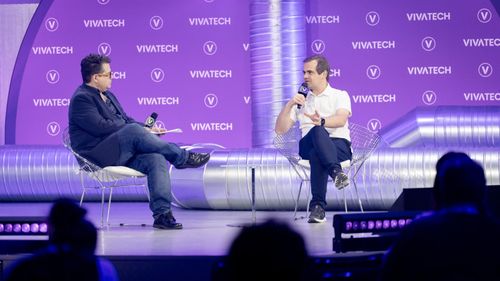
Artificial intelligence changes democratic systems by reshaping how political information is created, distributed and consumed by the public. Governments increasingly rely on AI data to make decisions, while citizens use online platforms that curate political content in highly personalized and influential ways. As Amba Kak, Executive Director of AI Now, explained during a 2025 VivaTech panel, “AI is not just a technology that’s being used by us, it’s being used on us.” This reflects the growing concern that democratic societies need to actively control how AI evolves, instead of passively adapting to its future.
AI and the Political Landscape AI can be used to better understand citizens – a power that is wielded for good and bad. Political players now use advanced analytics and generative tools powered by AI to track voter behavior and refine their campaign strategies. This can improve outreach and responsiveness, but these AI systems are not always transparent and there is the risk that bias could be baked into them.
How Voters and Citizens Are Affected The impact of AI on citizens greatly depends on how voters interact with it. If people use AI as an educational tool to better understand politics and their society, it can have a very positive effect on engagement. On the other hand, if AI algorithms only feed certain information or viewpoints to voters, it limits the free-will and thought of society. The power of AI on voters was proven in a 2025 study by the journals Nature and Science. It found that a short conversation with an AI chatbot could meaningfully sway political opinions and was about four times as persuasive as a traditional political TV ad.
The Threats AI Poses to Democracy
The misuse of AI carries significant risks that could undermine democratic systems and institutions. “We all know that our democracies are in danger currently,” Axel Dauchez, founder of the citizen engagement platform Make.org, told the VivaTech audience. “There is not any election in the world that is not very aggressively attacked by disinformation campaigns using mainly social media, and being AI powered.” Democratic participation is increasingly influenced by several threats, which can be supercharged by AI:
Misinformation and Disinformation at Scale Generative AI models can produce huge amounts of persuasive political content in seconds, making it easier to spread misinformation or manipulate public narratives. These outputs can erode trust in traditional media and influence voters with fake information. Dauchez says the stakes are incredibly high: “Most countries are doing disinformation campaigns at an unimaginable scale, in terms of number of attacks and smartness of attacks,’ he warned. “If we lose the legitimacy of an election, we lose everything.”
Deepfakes and Manipulated Content The rise of AI-generated political deepfakes – highly realistic but unreal audio and video – further complicates the spread of democratic information. Fabricated speeches, manipulated interviews or misleading campaign content can distort public perception and chip away at voter confidence.
Election Interference and Voter Manipulation AI technologies can also be used for malicious targeted influence campaigns designed to shape voter behavior or suppress turnout. According to Dauchez, “The risks on the table are twofold. Misuse of AI to impact the legitimacy of an election. The second is LLMs (large language models) embedding bias that can radically change the reality of the freewill of people.”
Erosion of Public Trust Trust in government and social institutions can decline when citizens struggle to tell the difference between real and fake information. This breakdown of confidence can lead to less democratic participation and increased social polarization. AI Now’s Amba Kak argues that to preserve democracy, AI innovation needs to be balanced with oversight that protects society and citizens’ control: “The fact that the power of these corporations needs to be tamed – not just for foreign governments, but for any state actor as a kind of active threat to be managed – I think is common sense at this point.”
The Opportunities AI Creates for Democracy
While the risks are real, AI also offers powerful opportunities to reinforce democratic systems and make politics more inclusive.
Strengthening Democratic Participation AI-powered platforms can make citizen engagement easier by simplifying complex policy and political conversations. “Today, thanks to AI you can help anyone to maximize his ownership of society,” said Dauchez, highlighting this potential. “He can participate, he can understand complex content. Everything becomes accessible and simple at the level of understanding of anyone.” When used for educational purposes, AI tools can help people better engage in the democratic process.
AI as a Tool for Government Accountability AI has the potential to improve trust and transparency in public administration by sniffing out wasteful government practices, monitoring compliance and tracking performance. This can help elected officials make better, more evidence-based decisions and strengthen public accountability.
Improving Public Services and Governance According to the OECD, AI can improve the delivery of public services in areas such as healthcare, education and urban planning when used responsibly. These improvements increase citizens’ confidence in democratic governance and how positively voters view the effectiveness of their institutions.
AI and Elections
Elections are one of the most visible examples of the impact AI has on democracy. As new AI technologies collide with the political process, the strength of elections is being tested in several ways:
AI-Powered Political Campaigns Campaign teams increasingly use AI to optimize messaging, analyze demographic trends and manage digital outreach strategies. While these tools can improve efficiency, they also raise questions about privacy, fairness and the ethical use of data in democracies.
The Role of Social Media Platforms A major 2025 study by the Reuters Institute for the Study of Journalism, found that 54% of Americans get news from social media – more than any other source of information. Social media platforms play a key role in shaping political discourse, acting as gatekeepers for information. Algorithms can amplify or suppress certain narratives, influencing public opinion and electoral dynamics.
Key Cases From Recent Elections Recent electoral cycles across the world have shown the benefits and risks of AI technologies:
- AI Translation: Politicians in Japan, India, the U.S. and more are using AI to translate events in real time or even create videos that make them appear fluent in other languages. Speaking to people in their native languages can increase outreach, but has also raised questions around manipulation.
- AI Deepfakes: AI is being actively used by political campaigns in the U.S. to create fake videos of opponents. There are increasing calls for federal regulation of political deepfakes, but some people argue the technology qualifies as free speech.
- AI Disinformation: In Nepal’s 2026 election, AI-generated content flooded social media to spread misinformation ahead of the vote.
How Governments Are Responding
Global governments are developing AI regulatory frameworks and policy initiatives to address the risks to democracy. AI Now’s Amba Kak says this governance is key to harnessing the positive potential of AI: “We should try and view regulation as laying the foundation for disruption to happen,” she explains. “We need to think of regulation less as this passive, burdensome friction, and much more as opening a Pandora’s box of innovation.”
The EU’s Approach to AI Governance The cornerstone of the EU’s AI governance is the AI Act. Adopted in 2024, it established the bloc’s first broad legal framework governing AI systems and places stricter rules on technologies that could affect fundamental rights, public safety or democratic processes.
The United States In the U.S. there are national laws against using AI voices in robocalls after a 2024 robocall impersonated former President Joe Biden. 26 states also have laws regulating political deepfakes, but these rules aren’t always followed and can’t stop malicious outside actors posting content online.
International Lessons in AI Regulation The importance of global cooperation is increasingly recognized for protecting democracies and elections often targeted by the same foreign actors. Shared principles and guidelines around AI can help democratic states manage AI’s cross-border impacts and protect election integrity.
The Future of AI and Democracy
The long-term relationship between AI and democratic governance will depend on the collective choices made by policymakers, technology companies and citizens.
Building AI Policies That Protect Democracy Axel Dauchez suggests that strengthening social cohesion should be part of protecting democracies against AI: “The first solution is to build the social resilience of citizens,” he explains. “One of the ways to counterfire the hyper-segmentation and disinformation is to work on involving people on what they have in common. And in this field, AI becomes a solution.”
The Role of Tech Companies and Elected Officials Collaboration between governments and tech companies will be critical to ensuring that AI contributes positively to democracy. But Amba Kak emphasizes that democratic oversight has to extend beyond elite decision-making: “We can’t just rely on the elite or top down interventions in this space,” she says. “At the end of the day regulators, politicians need to feel the public pressure to bend the arc of this technology toward the public interest.” Time is of the essence. AI’s proven ability to be a positive and negative force on democracy means governments, tech companies and citizens themselves urgently need to play an active role in shaping how AI influences the democratic process.
Secure your pass to VivaTech and experience firsthand the tools designed to bolster transparency and meet the experts who are "bending the arc" of technology toward the public interest.