The AI skills gap is an urgent challenge facing business leaders. Artificial intelligence has transformed how companies operate, compete and grow – but not every organization is ready. To succeed in closing the AI skills gap, companies need to invest in technology and in people.
What is the AI skills gap?
The AI skills gap refers to the disconnect between the AI capabilities companies need and the skills their workforce actually has. Businesses are rapidly integrating AI tools, but many employees lack the technical knowledge, data literacy and strategic understanding to use them effectively.
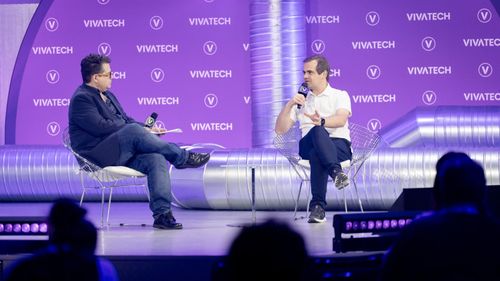
“Training is key,” said Julie Ranty, co-founder and CEO of the upskilling platform Pollen, at VivaTech 2025. “87% of companies make [AI] a priority, but only half of employees have been trained so far. So there's still a big gap.”
The numbers don’t lie
The cost of the AI skills gap is enormous. Global market intelligence provider IDC estimates that in 2026 more than 90% of global organizations will struggle with AI skills shortages, costing them as much as .5 trillion.
Employees feel the AI skills gap too. 93% surveyed for Slalom’s 2026 AI Research Report said workforce barriers such as underdeveloped skills and inadequate training are limiting their progress with AI.
Why the gap keeps growing
What’s driving the shortage Several forces contribute to the AI skills gap:
Speed of innovation: AI tools evolve faster than traditional training programs
Talent scarcity: Demand for AI engineers, data scientists and machine learning specialists far exceeds supply
AI tool education: Non-technical employees have access to AI tools, but not always the skills to use them effectively
Fragmented learning: Many organizations rely on ad hoc training instead of structured upskilling
Because AI is reshaping roles across nearly every job function, AI literacy needs to be treated as a baseline skill, not a niche expertise.
What it costs to do nothing
Failing to address the AI skills gap is a huge business risk. Only 5% of global firms are seeing real returns on AI, according to a 2025 report by Boston Consulting Group.
Companies that don’t invest in AI skills are likely to see:
- Slower innovation cycles and product delays
- Poor ROI on AI investments
- Increased reliance on external consultants
- Competitive disadvantage in fast-moving markets
- Lost revenue
AI adoption without workforce readiness leads to underused AI tools and missed opportunities.
Is your organization ready for AI?
How to run an AI readiness check Before closing the AI skills gap, companies need to understand where they stand, and their goals.
“Companies have to choose what they will do with AI,” Claire Gourlier, Senior Partner at the Strategy and Transformation Consulting Firm Kéa, told the crowd at VivaTech. “If they only do productivity, they will probably destroy some jobs and will destroy some value also. But if companies transform with AI they will probably fuel innovation, transform the way to do the job, and gain value.”
A practical AI readiness check includes:
- Skills audit: What AI capabilities exist across teams today?
- Tool usage analysis: Are employees using AI tools or avoiding them?
- Leadership alignment: Do executives understand AI’s strategic role?
- Data infrastructure: Are systems in place to support AI-driven workflows?
This kind of assessment helps organizations prioritize the right actions.
The skills your teams actually need
Closing the AI skills gap requires building a balanced skill set across the organization, including:
- AI literacy: Understanding what AI can and cannot do
- Data fluency: Interpreting and working with data
- Prompting and tool usage: How to effectively use generative AI tools
- Critical thinking: Evaluating AI outputs and avoiding bias
- Change management: Adapting company workflows and processes
“What you want to create in your organization is the right momentum for [AI] to take off,” says Matthieu Birach, Chief People Officer at Doctolib. “I think people today focus too much on the structure of it, the governance of it, rather than creating the conditions for people to actually test it and build stuff.”
AI’s impact on the workplace is as much cultural as it is technical, so while hard skills need to be taught, soft skills such as adaptability, communication and creativity can’t be ignored.
How to close the AI skills gap
Build a training program that works
Effective AI upskilling goes beyond one-off workshops. Companies successfully closing the AI skills gap are embedding AI training into daily workflows, offering role-specific learning paths, and combining technical and non-technical training.
Hands-on experimentation is also crucial to building AI capability in real tasks, as Birach explains: “There's a blocker when it's the first time to interact with a blank page. So we put people in a room and did hackathons where they could work and build solutions, and that was the most drastic solution in terms of adoption. The most useful thing was to actually learn by doing in the end.”
Rethink your workforce strategy
Closing the AI skills gap also requires a shift in how companies think about talent:
- Hiring: Prioritize adaptability, not just expertise
- Training: Upskill existing employees instead of replacing them
- Job Redesign: Create hybrid roles that combine specific expertise with AI skills
- Partnerships: Work with startups and ecosystems that can help your company reach its AI goals
This approach can help businesses scale AI adoption without relying only on scarce external AI talent.
Removing the roadblocks to AI adoption
The obstacles holding teams back
Even with AI skills training programs in place, several barriers can slow progress:
- Lack of leadership buy-in
- Fear of job displacement among employees
- Poor integration of AI tools into existing systems
- Limited access to high-quality data
Making AI part of daily work
The most successful companies treat AI not as a standalone initiative, but as part of everyday operations. That means:
- Integrating AI into core business processes
- Encouraging experimentation across teams
- Rewarding employees who adopt and innovate with AI
A company’s future competitiveness likely depends on how well it can embed AI into workflows.
What great AI upskilling looks like
Keep learning, keep growing
AI skills are not static. Continuous learning is essential to closing the gap.
Top-performing organizations:
- Update training programs regularly
- Provide ongoing access to learning platforms
- Encourage peer-to-peer knowledge sharing
Measuring what’s working
To ensure progress, companies need clear metrics.
Be sure to measure:
- AI tool adoption rates
- Productivity improvements
- Employee confidence in using AI
- Business outcomes linked to AI initiatives
Without measurement, AI upskilling efforts can become disconnected from the real impact.
The AI workforce of tomorrow
Traditional roles are evolving, but that doesn’t mean AI is a job killer.
“I don't think there's going to be less work,” says Stanislas Polu, co-founder of custom AI agents platform Dust. “It's just going to be better work because a lot of that work that used to be done at entry level will be doable by the machine.”
New roles, new opportunities
As AI adoption grows, new roles are emerging, including:
- AI product managers
- Prompt engineers
- AI ethics specialists
- Automation strategists
Turning AI into a growth engine Closing the AI skills gap can help companies unlock faster innovation, more efficiency, new business models, and a competitive advantage.
The key is to treat AI as not just a tool, but a key driver of growth.
The future belongs to those who upskill now
Key takeaways
- The AI skills gap is a strategic business challenge, not just a talent issue
- Technology alone is not enough – people determine AI success
- Companies that invest in AI upskilling today will lead tomorrow
Resources and next steps
For business leaders, the priorities are clear: Assess your current capabilities, invest in structured training, and align AI strategy with workforce development.
Innovation and startup ecosystems like the one at VivaTech can support company AI transformations by connecting companies with the talent and knowledge needed to use AI strategically. Join us at the next edition of VivaTech in Paris to turn your AI ambition into action!