Artificial intelligence is reshaping the music industry by changing how music is created, produced and experienced. To be clear, AI is not replacing artists. But today’s machine learning models can create sounds and production that used to require expensive music studios and years of technical expertise.
What is AI in music production?
AI in music production refers to the use of artificial intelligence technologies to assist, automate or enhance different parts of the music creation process.
These tools use machine learning, generative AI and large audio datasets to analyze patterns in music and produce new outputs. AI in music production isn’t one technology, but a combination of multiple systems that can understand rhythm, harmony, vocals, sound textures and production styles.
In a sign of how mainstream AI in music production is becoming, 87% of producers surveyed by music composition platform LANDR say they already use AI tools in some part of their music workflow.
From traditional studios to intelligent tools
Music production has always been influenced by technology. Across the years, innovations from the analog tape machine to digital audio workstations (DAWs) have changed how artists create music. AI is the next step in that evolution.
Today’s AI tools can:
- Generate melodies and chord progressions
- Suggest lyrics or song structures
- Create synthetic vocals
- Clean and isolate audio tracks
- Mix and master songs automatically
- Produce royalty-free sound libraries in seconds
For independent musicians and creators, these newfound capabilities can dramatically lower the barrier to entry.
Key AI technologies used in music today
Several forms of AI are driving innovation across the music industry:
- Generative AI models capable of creating original audio content
- Machine learning algorithms trained on large music datasets
- Natural language processing (NLP) for lyric generation and prompt-based music creation
- Audio analysis tools for mastering, EQ correction and vocal enhancement
- Voice synthesis and cloning technologies to generate or edit vocals
Similar to how artificial intelligence art has opened up new creative pathways for artists, these AI technologies have created new possibilities for composers.
How AI tools are changing the way artists and producers work
AI can be used at any stage of the music production process to influence the end product.
Generative models and automated sound creation
One of the most visible trends is the rise of generative AI music platforms capable of producing sounds, loops or complete compositions from simple text prompts.
Artists can now type: “Create an atmospheric electronic beat inspired by ambient techno” into a generative tool and receive multiple audio outputs within seconds.
When used this way, AI can act as a creative assistant, speeding up the experimentation process and allowing creators to test out ideas faster than ever.
AI-assisted composition: supporting human creativity, not replacing it
Many experts argue that AI works best in music production as a collaborative tool.
Researchers at Carnegie Mellon University found that listeners consider AI-generated music less creative, with humans still significantly outperforming AI in emotional interpretation, originality and cultural nuance.
“AI is a very logical tool, whereas music and art in general is all about emotion,” explains Romain Simiand, Chief Product Officer for Ircam Amplify, the technology arm of the world's largest public music research center. “The best position for GenAI in the future when it comes to music is to become a real tool, a tech enabler, a co-producer to help the artist.”
From idea to track: AI in the production workflow
AI now touches nearly every stage of music production. For example it can assist in:
- Brainstorming musical ideas
- Songwriting assistance
- Sound generation
- Vocal processing
- Beat creation
- Mixing and mastering
- Audio restoration
- Distribution optimization
Parts of the process that once took days can happen in minutes with AI. For creators, this means they can spend more time on artistic direction and less time on repetitive technical work.
The most popular AI tools in music production right now
The ecosystem of AI music tools is growing, with startups and major platforms competing for control over the future of audio creation.
Audio generation and sound design tools
The most popular platforms specializing in AI-generated music and sound creation include:
These AI sound generation tools allow users to create songs from prompts, customize genres and experiment with new sounds. Some producers use them only for inspiration, while others integrate AI-generated stems (isolated elements of a song) directly into professional tracks.
AI models for mixing, mastering and quality enhancement
AI is also transforming technical production workflows. Platforms such as LANDR, iZotope and Adobe Podcast can use machine learning to:
- Balance audio levels
- Enhance vocal clarity
- Remove background noise
- Control loudness
- Suggest mastering settings
These tools enable independent musicians to produce professional-quality work even without access to expensive studios or engineers.
The impact of AI on musicians, artists and the music industry
The rise of new AI music tools creates both opportunities and disruptions for the industry.
New ways for creators to express their musical vision
For many artists, AI helps them unlock new creative possibilities. For example, musicians can:
- Experiment with genres outside their expertise
- Prototype ideas instantly
- Collaborate with AI-generated sounds
- Create immersive audio experiences
- Personalize music for audiences at scale
But of course, there is the question of authenticity and identity raised by AI creation. AI can generate patterns, but it’s human artists who create meaning.
“Today when you use a prompt, there is no artistic guidance, no emotion,” says Ircam Amplify’s Simiand. “Looking at it today as a creator is, in our opinion, not the right way to look at it.”
Berklee College of Music experts agree, arguing that musicians should approach AI as a tool for augmenting their creativity, not as a substitution.
How AI is democratizing access to professional music production
Historically, professional music production has required significant financial resources. AI changes that. Independent creators now have access to affordable mastering tools, AI-assisted composition, intelligent audio cleanup, automated production workflows and more.
This kind of democratization could lead to a massive increase in music creation, especially among new creators without access to the traditional industry system.
At the same time, it could also create a more crowded and competitive landscape where originality becomes an even more valuable asset.
Challenges and concerns: copyright, data and creative ownership
As in other creative fields, AI has opened a Pandora’s box of legal and ethical questions, many of which remain unresolved.
Who owns AI-generated music? The copyright question
One of the biggest debates concerns ownership. If an AI model generates a song, who owns the copyright? The user, the platform, or the creators whose music trained the model?
Current laws vary across countries and major companies including Sony Music are campaigning for stronger music copyright protections. It’s a challenge that reflects the wider lack of clarity around who owns ai-generated content.
Training data, transparency and ethical use in AI music tools
Many generative AI systems are trained on massive datasets of existing music. Critics argue this method means artists are often not compensated, training datasets lack transparency, and AI-generated songs may reproduce copyrighted patterns.
Right now the music industry is experiencing a phase where AI innovation needs to be balanced with creativity, ethics and intellectual property rights. As regulation evolves, transparency around training data and licensing is likely to become central to the future of AI music production.
The future of AI in music production
The question is no longer whether AI will influence music production — but how much it will change the game.
What’s next for generative AI and human collaboration in music?
Future AI music production tools are likely to become more personalized, interactive, context-aware, and better at emotional interpretation.
For example, we could soon see AI tools capable of altering live performances in real time, generating immersive soundtracks dynamically or collaborating directly with artists in studio sessions.
Will AI redefine the role of the producer and the artist?
The role of producers is already shifting thanks to AI in music production. Tomorrow’s producers will likely spend less time on technical execution and more time on elements such as creative direction, storytelling, emotional curation, brand identity and human experience design.
There’s an argument that AI could increase the importance of these distinctly human qualities rather than eliminate them.
Conclusion: AI as a creative partner in modern music production
AI in music production is not a tech trend — it’s transforming the structure of the industry.
From generative composition tools to intelligent mastering systems, AI is democratizing access and opening new lanes of artistic experimentation. At the same time, there are urgent questions around authenticity, ownership and creative value that need to be addressed.
The future of music won’t belong entirely to humans or machines, but to the creators who can successfully combine both.
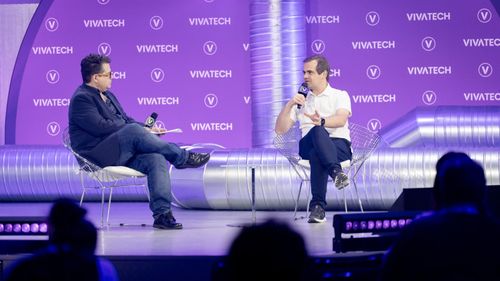
Come join the conversation around creativity and ethics in AI music production at VivaTech, Europe’s biggest startup and tech event.